• Written by Wieteke Idzerda, Occupational Therapist and CRT Therapist

    Having just been camping with our two children, a reflective piece on this topic feels timely. Especially at a time where recently I’ve been particularly reflecting heavily on my own occupational being and how to best find my occupational balance.

    In a world that often feels fast, structured, and digitally saturated, the simplicity of camping with children offers something deeply therapeutic. School holidays, in particular, provide a rare and valuable window—an opportunity to step out of routine and into connection, exploration, and presence.

    From an occupational therapy perspective, camping is far more than a recreational activity. It is a rich, meaningful occupation that supports development, wellbeing, and family connection in ways that structured environments often cannot.


    Occupation in Its Purest Form

    Occupational therapy recognises that humans thrive through meaningful doing. Kielhofner’s Model of Human Occupation (MOHO) emphasises that participation in everyday activities shapes identity, competence, and wellbeing (Kielhofner, 2008).

    Camping strips life back to its essentials—sleeping, eating, moving, exploring—and in doing so, reconnects children with foundational occupations.

    There is no rush to get out the door. No strict timetable. Instead, the day unfolds organically:

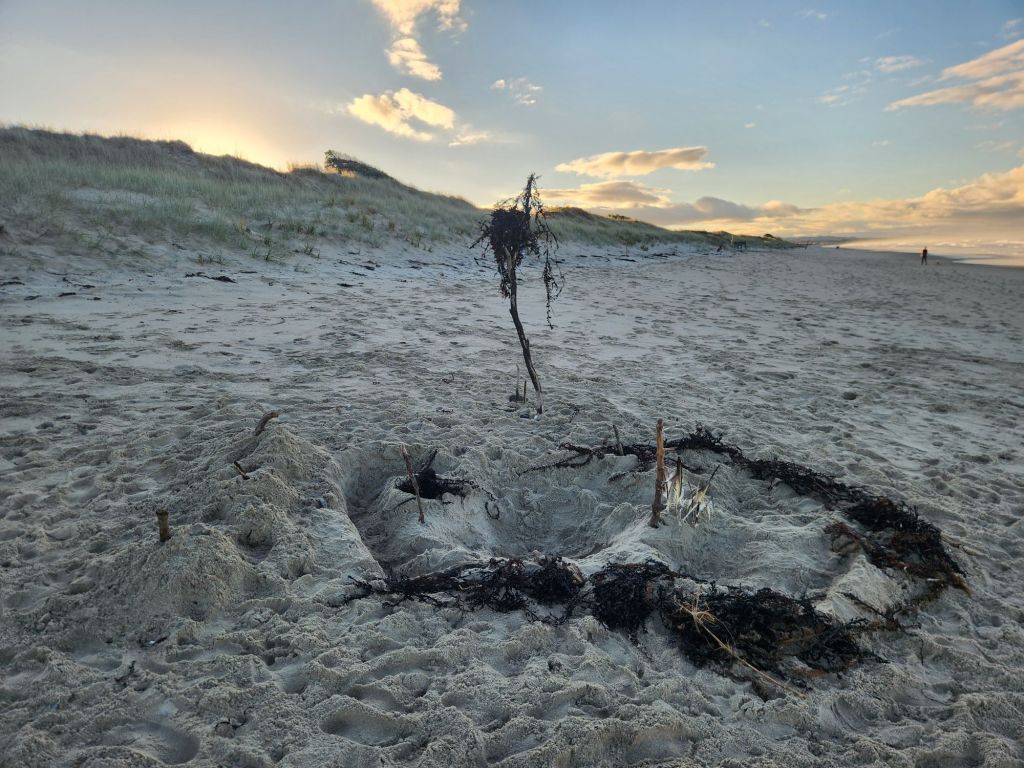
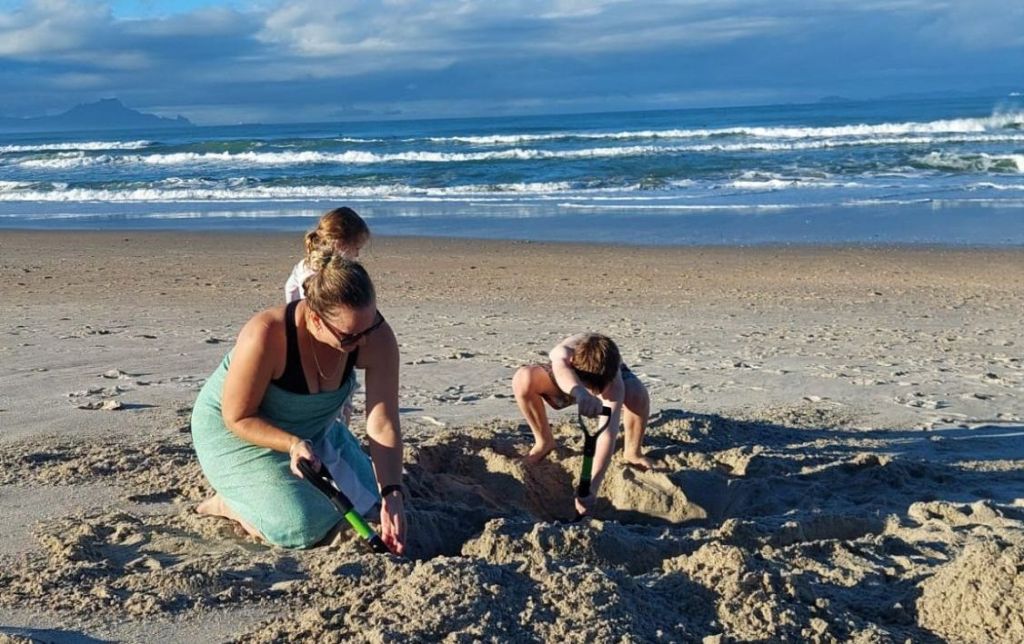
    Building sandcastles and digging forts at the beach becomes problem-solving

    Setting up a tent becomes teamwork

    Cooking outdoors becomes sensory exploration

    Through a MOHO lens, these experiences support:

    Volition: children are intrinsically motivated to engage

    Habituation: routines become flexible and adaptive

    Performance capacity: physical, cognitive, and emotional skills are integrated in real time


    Sensory Regulation and the Natural Environment

    Many children today live in highly stimulating environments—noise, screens, artificial lighting, constant transitions. For some, this contributes to dysregulation or sensory overload.

    Ayres’ Sensory Integration theory highlights the importance of meaningful sensory experiences in supporting adaptive responses and regulation (Ayres, 1972).

    Camping offers a natural sensory reset.

    The environment provides:

    Rhythmic auditory input (waves, wind, birds)

    Natural light cycles supporting circadian rhythms

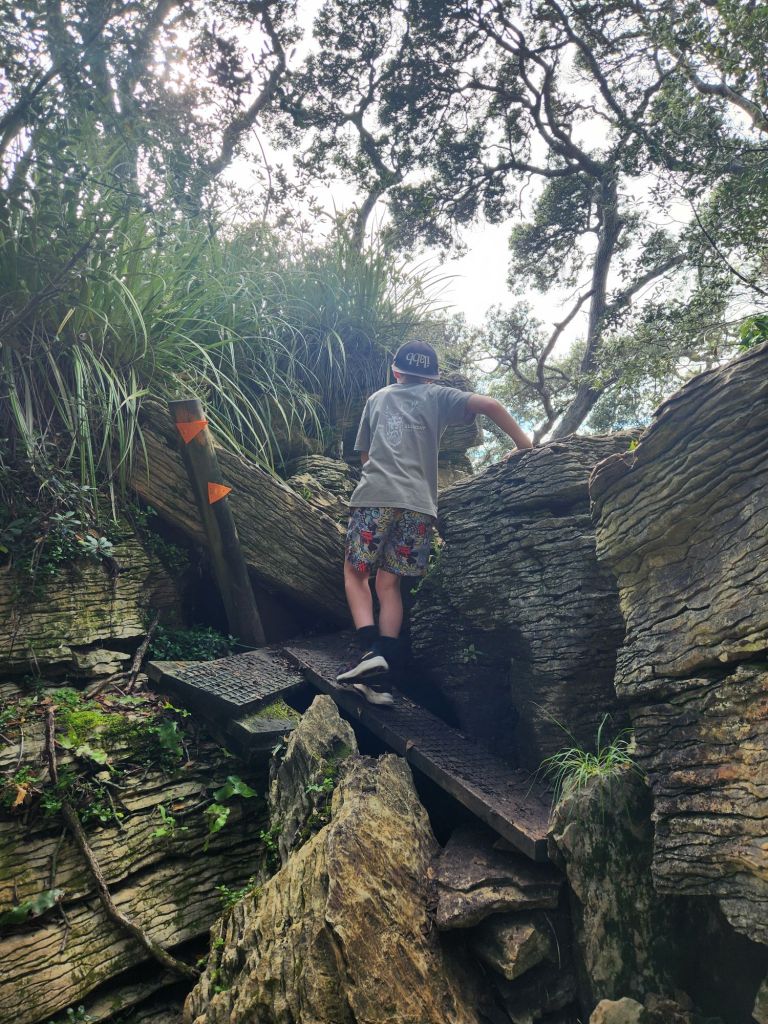
    Opportunities for proprioceptive and vestibular input (climbing, balancing, walking on uneven ground)

    These sensory experiences are often organising for the nervous system, supporting improved sleep, emotional regulation, and attention.


    Building Resilience Through “Just-Right” Challenge

    Occupational therapy often uses the concept of the “just-right challenge”—tasks that are neither too easy nor too difficult, promoting growth and mastery.

    Camping naturally creates these opportunities:
    ● Navigating new environments
    ● Managing discomfort (cold, wet, tired)

    Watching my son navigate tricky uneven terrain, express his worry and fear of failure but overcoming it was powerful for him and rewarding as a parent. He said “I’m so proud of myself, I was brave!”.

    These experiences align with Vygotsky’s concept of the zone of proximal development, where learning occurs with support just beyond current ability (Vygotsky, 1978).

    Children begin to internalise:
    “I can try”
    “I can adapt”
    “I can cope when things are hard”

    This builds occupational competence and confidence over time. Watching this concept in real time was so exciting.


    Unstructured Play and Occupational Development

    Unstructured play is a primary occupation of childhood. It supports creativity, executive functioning, and social development.

    Camping provides the ideal conditions for this:
    ● Open-ended materials (sticks, rocks, water)
    ● Minimal adult-directed structure
    ● Space for imagination to emerge

    ● Meet and play with new children

    Strengthening Family Connection Through Co-Occupation

    Camping is not just individual occupation—it is co-occupation, where shared activities create meaning between people.

    Occupational science highlights that co-occupations, such as shared meals or collaborative tasks, are fundamental to relationships and wellbeing (Pickens & Pizur-Barnekow, 2009).

    Camping allows for:
    ● Shared routines (cooking, setting up, packing down)
    ● Collective problem-solving
    ● Moments of presence without distraction

    These shared experiences strengthen attachment, trust, and a sense of belonging.

    Cultural Context in Aotearoa New Zealand

    In Aotearoa, connection to whenua (land) is deeply embedded in wellbeing. Engaging with the natural environment can support a broader, more holistic view of health—aligned with models such as Te Whare Tapa Whā, where wellbeing includes physical, mental, social, and spiritual dimensions (Durie, 1998).

    From an occupational perspective, this kind of play supports occupational balance—ensuring children experience a range of meaningful activities, not solely structured or performance-driven ones (Wilcock & Hocking, 2015).

    Camping offers a space for children to:
    ● Develop respect for the environment
    ● Experience a sense of place and belonging
    ● Engage in intergenerational knowledge sharing

    This reinforces that occupation is always shaped by cultural and environmental context.

    These shared experiences strengthen attachment, trust, and a sense of belonging.


    Letting Go of Perfection

    Camping with children is not always idyllic.

    There will be:
    Sand in everything
    Sibling arguments
    Weather that doesn’t cooperate

    But from an occupational therapy perspective, meaningful engagement is not about perfect outcomes—it is about participation and experience. I know from when I was a child, there most memories trips were ones which didnt quite go to plan. Those experiences developed into stories which to this day are still spoken and laughed about.

    Occupational therapists recognise that growth often occurs in moments of challenge, discomfort, and unpredictability.


    Final Thoughts

    Camping during the school holidays is not just time away—it is time into something deeper.

    It is into:
    Presence
    Connection
    Capability
    Simplicity

    Through the lens of occupational therapy, these experiences support not only development, but identity, resilience, and wellbeing.

    And perhaps, in the quiet moments—watching a child balance on a log, build a sandcastle, or fall asleep — we are reminded that the most powerful occupations are often the simplest ones.

    References

    Ayres, A. J. (1972). Sensory integration and learning disorders. Western Psychological Services.

    Durie, M. (1998). Whaiora: Māori health development (2nd ed.). Oxford University Press.

    Kielhofner, G. (2008). Model of human occupation: Theory and application (4th ed.). Lippincott Williams & Wilkins.

    Pickens, N. D., & Pizur-Barnekow, K. (2009). Co-occupation: Extending the dialogue. Journal of Occupational Science, 16(3), 151–156. https://doi.org/10.1080/14427591.2009.9686656⁠

    Vygotsky, L. S. (1978). Mind in society: The development of higher psychological processes. Harvard University Press.

    Wilcock, A. A., & Hocking, C. (2015). An occupational perspective of health (3rd ed.). Slack Incorporated


  • Written by Wieteke Idzerda, Occupational Therapist, CRT Therapist

    Healthcare leadership in Aotearoa New Zealand is evolving rapidly. It sits at the intersection of system reform, growing population needs, workforce pressures, and an increasing commitment to equity—particularly for Māori and underserved communities. Within this shifting landscape, emerging leaders are being asked not just to manage services, but to reshape them.

    This is not leadership as hierarchy. It is leadership as influence, courage, and presence. One of my earlier OT supervisors, always said in the face of anything difficult, have courage. That has stuck with me and I often have to lean on this to get through challenging times.

    A System in Transition: Why Leadership Matters Now

    Healthcare in Aotearoa is undergoing significant reform, with a stronger focus on equity, integration, and Te Tiriti o Waitangi. Alongside this, demand is rising—driven by ageing populations, chronic conditions, and widening health inequities (Ministry of Health, 2022).

    In practice, this looks like:

    – More complex clients
    – Faster decision-making
    – Greater accountability

    It shows up in everyday actions: speaking up, questioning, advocating.

    Modern healthcare leadership is increasingly understood as relational and distributed, rather than hierarchical (West et al., 2015). This shift is essential in a system that depends on collaboration across professions and communities.

    What is Important in Emerging Leadership?

    In Aotearoa, leadership is not neutral—it is deeply cultural, relational, and values-driven.

    Equity and Te Tiriti o Waitangi
    Leadership must actively address inequities for Māori and other underserved populations. This requires more than intention—it requires action, partnership, and reflection (Came et al., 2020).

    There have been times where I have had to pause and ask myself: Whose voice is missing here? That question alone can shift practice.

    Systems Thinking
    Leaders must understand how services connect. Decisions made in one space ripple across the system.

    Relational Practice
    Trust, humility, and connection matter. Leadership is often less about having answers, and more about creating space for others. Listen, encourage and build up. 

    Workforce Wellbeing
    There is no sustainable system without a supported workforce. Burnout is not an individual failure—it is a system signal (West et al., 2015).

    The Unique Contribution of Allied Health Leadership

    Allied health professionals bring something distinct to leadership.

    Through an occupational therapy lens, frameworks like the Model of Human Occupation (MOHO) emphasise volition, habituation, and performance capacity (Kielhofner, 2008). These concepts do not just apply to clients—they apply to teams and systems.

    – Volition: What motivates our workforce?
    – Habituation: What patterns are we reinforcing?
    – Performance capacity: Are we enabling people to function at their best?

    I often find myself drawing on this lens in leadership spaces—seeing not just tasks, but people in context.

    Allied health perspectives are inherently:

    – Holistic
    – Function-focused
    – Collaborative

    Yet, leadership spaces have not always reflected this diversity. Strengthening allied health leadership is critical for a system that aims to be person-centred and equitable (Stokes & Moore, 2021).

    Perceived Challenges to Overcome

    Emerging leaders are navigating a number of tensions:

    Workforce Pressure
    Short staffing, especially in rural and community settings, creates constant compromise (Ministry of Health, 2022).

    System Complexity
    Reform brings opportunity—but also uncertainty.

    Professional Identity
    Many clinicians hesitate to identify as leaders. I have felt this too—that quiet questioning of “Am I ready?” or “Is this my place?”.

    Equity vs Reality
    We are called to lead equity-focused change within systems that are still catching up.

    These tensions are not barriers to leadership—they are the environment in which leadership is forged. Where we can be creative and innovative. Where we can lead change and show what can be done.

    The Courage to Make Difficult Decisions

    Some of the hardest leadership moments are the quiet ones.

    Having to repriortise my day, meaning that I have to change not only my day but someone else’s.
    Challenging a colleague when something does not feel right.
    Saying no, when yes would be easier.

    I remember a moment where I had to advocate strongly for a client’s access to services, knowing it would create tension within the team. It would have been easier to stay quiet. But leadership, in that moment, meant discomfort.

    Ethical decision-making in healthcare often involves navigating competing values, rather than clear right or wrong answers (Beauchamp & Childress, 2019).

    Avoiding difficult decisions does not protect people—it risks harm.

    Backing Yourself as a Leader

    Backing yourself is not about confidence all the time—it is about commitment to your values, even when confidence wavers.

    There are still moments where I second-guess decisions after the fact. That does not disappear. What changes is the willingness to act anyway.

    Leadership identity develops over time, through experience, reflection, and support (Stokes & Moore, 2021). It grows in small moments:

    – Speaking up in a meeting
    – Trying something new
    – Reflecting honestly on what did not go well (and be willing to learn from it)

    You do not “arrive” as a leader—you become one.

    Sitting with Discomfort

    Discomfort is a constant companion in leadership.

    – When change is resisted
    – When conversations are hard
    – When outcomes are uncertain

    In Aotearoa, culturally safe practice requires us to sit with discomfort—particularly when engaging with perspectives that challenge our own (Came et al., 2020).

    I have learned that discomfort is not something to fix quickly. Dan Carter (a legendary All Black) often spoke about “leaning in” to pressure and discomfort rather than avoiding of it is key. I often reflect on this but sometimes, the most important thing is to stay present:

    – To listen
    – To reflect
    – To not rush resolution


    This is not easy work. But it is necessary work.

    A Way Forward

    Emerging leadership in Aotearoa healthcare is grounded in:

    – Equity
    – Relationships
    – Courage
    – Reflection

    It is not about having all the answers. It is about showing up—especially when things are complex.

    You can feel uncertain, and still lead.
    You can feel uncomfortable, and still do what is right.

    In a system under pressure, leadership is no longer a position—it is a practice.

    And increasingly, it belongs to those who are willing to step forward, speak up, and stay present when it matters most.

    Disclaimer: All views are my own and are not attributed to my employer or other organisations I’m affiliated with.

    References

    Beauchamp, T. L., & Childress, J. F. (2019). Principles of biomedical ethics (8th ed.). Oxford University Press.

    Came, H., O’Sullivan, D., & McCreanor, T. (2020). Introducing critical Tiriti policy analysis through a retrospective review of the New Zealand Primary Health Care Strategy. Ethnicities, 20(3), 434–456. https://doi.org/10.1177/1468796819896466

    Kielhofner, G. (2008). Model of human occupation: Theory and application (4th ed.). Lippincott Williams & Wilkins.

    Ministry of Health. (2022). New Zealand health system reforms. https://www.health.govt.nz

    Stokes, T., & Moore, A. (2021). The future of allied health leadership in Aotearoa New Zealand: A literature review. Auckland University of Technology.

    West, M., Eckert, R., Steward, K., & Pasmore, B. (2015). Developing collective leadership for healthcare. The King’s Fund. https://www.kingsfund.org.uk


  • Written by Wieteke Idzerda, Occupational Therapist, CRT Therapist


    For as long as I can remember, I have often found myself reflecting on the invisible threads that shape who we are—not just as people, but as occupational beings. As an occupational therapist, I understand that what we do, how we do it, and why it matters is deeply influenced by context. But context isn’t just environment—it’s ancestry, migration, culture, and time.

    For me, that story begins long before I was born, rooted in Dutch ancestry, and carried across to Aotearoa New Zealand. It unfolds through a childhood in the 80s and 90s—a time and place that quietly, but powerfully, shaped my sense of doing, being, becoming, and belonging.

    Inherited Occupations: The Legacy of Doing

    Dutch cultural values—diligence, productivity, and practicality—were not explicitly taught, but deeply embedded in everyday life. These values became internalised through repeated patterns of doing.

    Through the lens of the Model of Human Occupation (MOHO), this reflects the development of habituation and volition. Habituation shaped the routines and expectations around productivity, while volition influenced what was valued—hard work, contribution, and usefulness (Kielhofner, 2008).

    There was an unspoken message: doing matters.

    As a result, productivity became closely tied to identity. Rest was something to be earned. Busyness became normalised. These early occupational patterns contributed to my emerging occupational identity – and still do.

    Growing Up Kiwi: Freedom, Play, and Occupational Exploration

    In contrast, growing up in New Zealand in the 80s and 90s offered a different occupational landscape—one grounded in outdoor play, independence, and exploration. My childhood became filled with camping, hunting, imaginary filled play with friends (no parents hovering near by). Play was my occupation.

    This environment fostered volition in a different way. It supported intrinsic motivation, curiosity, and engagement in occupations for enjoyment rather than productivity. Within MOHO, this reflects the interplay between personal causation, values, and interests—core components of volition (Kielhofner, 2008).

    Here, occupation was not just about doing—it was about being.

    This dual exposure created an early awareness of occupational balance, even if I did not yet have the language to describe it.


    Migration, Identity, and Belonging

    Migration is not only a physical relocation—it is an occupational and identity transition. Even as a child, there is often a subtle (sometimes not so subtle) awareness of difference, of navigating between worlds. This was seen in the difference of language, traditions and behaviours. 

    Wilcock’s framework of doing, being, becoming, and belonging provides a helpful lens here (Wilcock, 2006). While I was firmly situated in New Zealand culture, my family’s European roots shaped a quieter layer of identity.

    Belonging became something negotiated rather than assumed.

    From an occupational perspective, this influenced how I engaged in roles and routines. It shaped my sense of self within occupations—how I performed, what I valued, and how I connected with others.

    Making friends while being very direct and strong in my values of what is right or wrong did not always help me. School was not an easy learning environment for me, especially when English was my second language. Unfortunately bilingualism in the 90s was discouraged so instead of learning to speak dutch fluently, we became a English speaking household. This isolated me from my Dutch heritage.

    Occupational Identity: Integrating Two Worlds

    Over time, these influences began to integrate rather than compete. I completely reached a point of acceptable when we were living in Europe during our OE (Overseas Experience) and I was able to spend much more time in Holland. I was able to consolidate my “uniqueness” – understand why I am who I am.

    The structured, productivity-oriented habits of my ancestry combined with the flexibility and openness of Kiwi culture. Within MOHO, this reflects the development of occupational identity—a composite sense of who one is and wishes to become as an occupational being (Kielhofner, 2008).

    My occupational identity became one that values both contribution and connection, both productivity and presence.

    This integration highlights a key idea in occupational science: identity is not static. It evolves through experience, context, and reflection.


    Te Ao Māori and Cultural Responsiveness: Expanding My Occupational Lens

    Growing up in Aotearoa New Zealand also means growing alongside te ao Māori—the worldview of tāngata whenua. While this was not my cultural origin, it has become an essential part of how I understand health, wellbeing, and occupation.

    As I’ve developed both personally and professionally, I’ve come to recognise that my own occupational lens—shaped by European ancestry and Western models of practice—is not universal. It is one way of seeing the world, not the way.

    Frameworks such as Te Whare Tapa Whā (Durie, 1998) have challenged and enriched my understanding of wellbeing as inherently relational and holistic. The interconnected dimensions of taha tinana (physical), taha hinengaro (mental/emotional), taha wairua (spiritual), and taha whānau (family) expand the way occupation can be understood—not just as individual doing, but as something deeply embedded in identity, spirituality, and collective belonging.

    This has required an ongoing process of reflection:

    Recognising where Western models like the Model of Human Occupation may prioritise individual agency over collective identity.

    Becoming more aware of how colonisation has shaped access to meaningful occupation for Māori.

    Understanding that “balance” may look different across cultural contexts.

    Letting go of assumptions about independence, productivity, and success.

    Cultural responsiveness is not a destination—it is a continual practice of humility, listening, and unlearning.

    For me, this means being open to different ways of knowing and doing. It means valuing whakawhanaungatanga (relationship-building) as central to occupational engagement. It means recognising that occupation can carry spiritual and ancestral significance, not just functional purpose.

    Importantly, it also means sitting with discomfort at times—acknowledging what I don’t know, and being willing to learn.

    Practice Implications: An Occupational Therapy Lens

    These lived experiences now shape how I practice.

    They have deepened my understanding of how culture, migration, and inherited values influence occupational participation. They remind me that what may appear as imbalance or dysfunction may instead reflect deeply embedded beliefs about doing and being.

    Using MOHO, I am often drawn to exploring:

    Volition: What motivates this person? What do they value?

    Habituation: What routines and roles have been shaped over time?

    Performance capacity: How does the person experience their ability to engage?

    Environment: What cultural and social contexts are influencing occupation?


    This perspective encourages a more nuanced and compassionate approach—one that honours the complexity of each person’s occupational story.


    Coming Home to Occupational Balance

    Reflecting now, I can see that my journey has been one of recalibration.

    Learning that rest is not something to be earned, but something inherently valuable.
    That productivity does not define worth.
    That being and belonging are just as important as doing.

    Occupational balance is not a fixed endpoint—it is dynamic, shaped by life stages, environments, and evolving identities (Townsend & Polatajko, 2013).

    In the end, my occupational being is a story of both windmills and pōhutukawa. Of structure and spontaneity. Of heritage and home.

    And in that space between, I have found not just balance—but meaning.


    References:

    Durie, M. (1998). Whaiora: Māori health development (2nd ed.). Oxford University Press.

    Kielhofner, G. (2008). Model of human occupation: Theory and application (4th ed.). Lippincott Williams & Wilkins.

    Townsend, E., & Polatajko, H. (2013). Enabling occupation II: Advancing an occupational therapy vision for health, well-being, & justice through occupation (2nd ed.). CAOT Publications.

    Wilcock, A. A. (2006). An occupational perspective of health (2nd ed.). SLACK Incorporated.


  • Written by Wieteke Idzerda, Occupational Therapist, CRT Therapist

    Life, lately, feels like a pressure cooker.

    Not the nostalgic kind that whistles softly on a Sunday afternoon, but the kind that sits heavy on the stove — sealed tight, heat building, no obvious release valve. Every role I carry adds another degree: mother, partner, friend, professional, community member. Each one meaningful. Each one chosen, in some way. And yet together, they create a weight that is hard to name and harder to put down.

    There’s a quiet expectation stitched through all of it — that I will do each role well. More than well. Exact and above expectation. That I will be patient, present, productive, compassionate, competent. That I will hold space for others without needing much space myself. That I will give without tallying the cost.

    And I do try. I try in the small, invisible ways that don’t make it into conversations or captions. In the early mornings and late nights. In the mental load that never quite switches off – even now as I reflect while writing this.  In the constant recalibrating — have I done enough here? Have I shown up properly there? Did I miss something? Could I have done that better?

    From an occupational therapy lens, I can see what’s happening — even if I don’t always know how to change it.

    This isn’t just “being busy.” It’s an occupational imbalance. Too much time and energy poured into roles that demand output, productivity, and care for others, and not enough into occupations that restore, nourish, or simply allow me to exist without expectation (Wilcock, 1998; Wagman et al., 2012). My occupational profile looks full — but not necessarily sustaining.

    My roles are meaningful, but they are also layered. Mother, wife, clinician, friend, community member — each comes with its own set of expectations, responsibilities, and emotional labour. Role strain isn’t surprising when the cumulative demand outweighs the capacity to hold them all well, all the time (Kielhofner, 2008).

    My habits and routines — the things that are meant to support me — have quietly shifted into patterns of over-functioning. Automatically saying yes. Filling gaps. Anticipating needs (all the time). Staying one step ahead. They are efficient, but not always intentional. They keep the system running, but they don’t always keep me well. In MOHO terms, habituation has become organised around others’ needs, rather than my own sustainability (Kielhofner, 2008).

    And then there is volition — the part of me that is about choice, motivation, and what actually matters the most to me.

    If I’m honest, that part has become quieter.

    Not gone — but harder to hear under the noise of obligation and expectation. What I want to do, what restores me, what feels aligned with who I am beyond my roles — those signals get overridden by what needs to be done. Over time, it becomes harder to distinguish between what I choose and what I feel compelled to carry (Kielhofner, 2008).

    What’s confronting is not just the effort, but the quiet fear that sits underneath it: that all of this trying might pass largely unseen. That at the end of it all, the nuance of what I’ve held, stretched, and carried won’t be captured in neat summaries or spoken aloud in rooms of remembrance. That the intention — to love well, to contribute meaningfully, to be steady for others — might not translate into something visible or easily named. As I write and reread this specific fear, I can feel myself dismiss it and essentially tell myself to stop being so “self absorbed” or “attention seeking”. It’s interesting to sit with this and consider it.

    Maybe this is also where occupational therapy offers something grounding.

    That meaning doesn’t only sit in outcomes or recognition — it sits in occupation itself. In the doing, being, becoming, and belonging that shape a life (Wilcock, 1998; Hammell, 2004). Even when it’s quiet. Even when it’s unseen.

    Still, that doesn’t make the pressure disappear.

    Because somewhere in all of this, there is also me. Not just the roles I occupy, but the person underneath them. The one who sometimes wonders what it would feel like to exist without performing usefulness. To have space that isn’t already spoken for. To be known not just for what I give, but for who I am when I’m not giving anything at all.

    That space can feel hard to find — or even harder to justify.

    And yet, without it, the pressure only builds.

    Maybe the work isn’t about perfectly balancing all the roles. Maybe that’s an impossible equation. Maybe it’s about gently rebalancing my occupations — not by removing what matters, but by making room for myself within it. Protecting small pockets of time that are not driven by obligation. Interrupting habits that keep me overextended. Listening, again, to volition — even if it starts as a whisper (Wagman et al., 2012).

    Because a pressure cooker, without release, doesn’t just hold — it eventually breaks.

    And I don’t want a life that looks full from the outside but feels unsustainable from within.

    I want a life where being a good mum, a good partner, a good friend, and a contributing member of my community doesn’t come at the cost of losing myself entirely. Where occupational balance isn’t a luxury, but a necessity. Where my roles are held with flexibility, not rigidity. Where my habits support me, not just everyone else. Where my choices reflect not only what is needed — but what is meaningful to me.

    Maybe it’s in the people who feel a little more held because I was here.


    Maybe it’s in the patterns I shift — including the ones within myself.


    Maybe it’s in choosing, quietly but consistently, a life that is not just full — but sustainable.

    And maybe, just maybe, that’s enough.

    References:

    Hammell, K. W. (2004). Dimensions of meaning in the occupations of daily life. Canadian Journal of Occupational Therapy, 71(5), 296–305. https://doi.org/10.1177/000841740407100509

    Kielhofner, G. (2008). Model of human occupation: Theory and application (4th ed.). Lippincott Williams & Wilkins.

    Wagman, P., Håkansson, C., & Björklund, A. (2012). Occupational balance as used in occupational therapy: A concept analysis. Scandinavian Journal of Occupational Therapy, 19(4), 322–327. https://doi.org/10.3109/11038128.2011.596219

    Wilcock, A. A. (1998). Reflections on doing, being and becoming. Canadian Journal of Occupational Therapy, 65(5), 248–256. https://doi.org/10.1177/000841749806500501


  • (Spoiler: It’s Not Just Crafts)

    By Wieteke Idzerda, Occupational Therapist, CRT Therapist


    Over the years, I’ve lost count of how many times colleagues have jokingly said, “you’re such an OT,” when I bring baking into the office, or cut flowers from my garden, or when I mention a current arts and crafts project I’m working on.

    It’s an understandable leap: if you’re an occupational therapist, surely you must love crafts. And sure—some of us do. But it’s probably safe to say that this assumption doesn’t hold true across the board. More importantly, occupational therapy in mental health is not just crafts.

    Yes, sometimes there are crafts. No, the goal is not to send everyone home with a mildly wonky cardboard box full of snuff containers, assorted modalities, and a newly acquired glitter addiction. To be honest, considering how much I personally love crafts, I very rarely use them in my day to day practice.

    Craft is a tool, not the therapy. In mental health occupational therapy, the focus is on helping people build skills, confidence, and cognitive capacity to engage in their everyday lives—thinking, planning, connecting, coping, and doing the things that matter to them. If a creative activity supports that goal, great. If it doesn’t, we don’t use it.

    Because mental health OT isn’t about keeping people busy. It’s about helping people function, participate, and thrive—craft supplies are optional.

    So, what does OT actually look like in mental health? Let’s bust a few myths.

    Myth 1: “OT Is Just Arts and Crafts”, the trusty notion we’re good at “keeping people busy”.

    Although I genuinely believe this belief has shifted over the years and there are many colleagues who know exactly what we do, somewhere along the line, OT once got branded as the profession “with scissors” or the profession “who weave baskets” (post World War II). We ended up in a position where we needed to advocate for our core skills and ring fence time in our practice to ensure we could practice “OT”. And while we do love a well-graded activity, crafts are never the point — they’re the vehicle.

    In mental health OT, activities are carefully chosen to:

    ●  Support cognitive skills (attention, planning, problem-solving)
    ● Regulate emotions
    ● Build routines
    ● Restore confidence
    ● Support participation in daily life

    That “simple” activity? It might be targeting:

    ● Executive functioning
    ● Frustration tolerance
    ● Social interaction
    ● Sensory modulation
    ● Task initiation and completion

    The craft isn’t the therapy. The thinking, doing, adapting, and reflecting is.

    Myth 2: “Mental Health OT Is Just Talking”

    We do talk — but we don’t stop there.

    OTs in mental health focus on doing, because mental health shows up most clearly in daily occupations:

    ● Getting out of bed
    ● Showering
    ● Eating
    ● Managing appointments
    ● Maintaining relationships
    ● Making decisions
    ● Coping with cognitive overload

    Instead of asking “How does that make you feel?” (important, but not our only tool), we might ask:

    ● “What happens to your thinking when tasks feel overwhelming?”
    ● “What makes mornings hardest?”
    ● “What does a good day actually look like for you?”

    Then we get practical.

    What OT Actually Looks Like in Mental Health

    Supporting Cognition

    Mental health conditions often impact:
    ● Attention
    ● Memory
    ● Processing speed
    ● Planning and organisation
    Mental flexibility

    OTs help people:
    ● Break tasks into manageable steps
    ● Reduce cognitive load
    ● Use visual supports and routines
    ● Practice thinking skills in real-life contexts

    Because remembering a coping strategy is one thing. Using it when your brain is overwhelmed is another.

    Helping Daily Life Feel Possible Again

    OTs zoom in on the everyday stuff that quietly falls apart:
    ● “I know how to shower — I just can’t start.”
    ● “I forget appointments constantly.”
    ●  “Making decisions feels exhausting.”
    ● “My brain goes blank when I’m anxious.”

    We work on:
    ● Habit and routine building
    ● Environmental modifications
    ● Energy conservation (yes, for mental health too)
    ● Grading activities so success is possible

    No judgement. No “just try harder.” Just practical support.

    Adapting the World (Not Just the Person)

    Mental health OT isn’t about fixing people — it’s about fitting occupations to real human brains.

    That might look like:
    ● Changing expectations
    ● Modifying tasks
    ● Adjusting environments
    ● Advocating for supports
    ● Normalising fluctuations in capacity

    Because sometimes the problem isn’t motivation.
    It’s cognitive overload.

    Why This Matters:

    Mental health recovery doesn’t happen in therapy rooms alone. It happens when someone can:
    ● Get through their day
    ● Participate in meaningful activities
    ● Feel capable again
    ● Reconnect with roles that matter to them

    That’s the heart of occupational therapy.

    Not glitter.
    Not basket weaving.
    Not worksheets.
    Not just “keeping people busy.”

    But helping people live their lives — with compassion, creativity, and cognitive insight.

    So Yes… Sometimes There Is Craft

    But if you see an OT running a group with paint, games, cooking, or planning activities, know this:

    Behind that “simple” task is:
    ● Clinical reasoning
    ● Cognitive grading
    ● Mental health expertise
    ● And a deep belief that doing matters

    Written with love by an OT who owns far too much stationary, has a love for arts and crafts, gardening and baking; and asks “what’s the occupation here?”.


  • By Wieteke Idzerda, Occupational Therapist


    Each December, homes around the world welcome a small but mischievous visitor: the Elf on the Shelf. While often seen as a fun holiday tradition (or a creative challenge for adults!), Elf on the Shelf actually taps into many core occupational therapy (OT) principles that support children’s development, participation, and daily routines.

    I’m not going to lie — this is a brand-new tradition in our household. Without trying to sound like the Grinch, I’ve resisted this “fad” for several years. My objections ranged from believing it was consumerism gone wild to feeling that Christmas doesn’t need more embellishment  or feeling uncomfortable with the idea that we were telling children an elf was spying on them and reporting back to Santa so he could better manage his “nice list.” I mean it sounded a bit creepy to me!

    However, when my seven-year-old son wrote to Santa this year and asked for an Elf on the Shelf, I felt my opposition finally come to an end. How could Santa (I) say no to the little guy?

    So, let me tell you — I am converted. We’re halfway through December now, and honestly, we are having fun. Who would have thought it would be such an amazing outlet for my creativity and bring so much joy to our household every single morning?

    So with this in mind and with Christmas just days away, I thought I’d embrace the festive spirit and make sense of Elf on the Shelf through an OT lens — purely for a bit of fun.

    What I’ve discovered is that when I view this tradition this way, the elf becomes much more than a holiday spy. It becomes a playful tool for learning, self-regulation, and skill-building. This can be seen across several key occupational therapy domains, including:

    ● Executive function skills

    ● Building routines and predictability

    ● Social and emotional learning

    ●  Play as a core occupation of childhood

    ● Sensory modulation / regulation

    ● Participation in activities of daily living


    1. Supporting Executive Function Skills

    Executive functioning includes skills such as planning, organisation, impulse control, working memory, and task initiation — all areas occupational therapists frequently support.

    Elf on the Shelf naturally encourages these skills by:


    ● Reinforcing rules and expectations (e.g. remembering not to touch the elf)

    ● Supporting impulse control (resisting the urge to move the elf)

    ● Encouraging working memory (remembering where the elf was yesterday and what it means)

    ● Promoting anticipation and planning (“What will the elf do next?”)

    These playful challenges reflect how OTs use structure and routine to support cognitive skill development in meaningful, motivating ways.


    2. Building Routines and Predictability

    Occupational therapy places a strong emphasis on daily routines, as they provide children with a sense of safety, structure, and emotional regulation.

    Elf on the Shelf:

    ● Appears consistently during a predictable time of year

    ● Moves overnight, reinforcing morning routines

    ● Can be paired with daily tasks (brushing teeth, getting dressed, packing bags)

    For children who struggle with transitions or anxiety, this predictable-yet-playful routine supports emotional regulation and participation in daily occupations.


    3. Encouraging Social and Emotional Learning

    Social-emotional development is a key area of OT practice. The elf often supports:

    ● Perspective-taking

    ● Understanding cause and effect (choices and behaviours linked to outcomes)

    ● Emotional awareness (excitement, disappointment, pride)

    When adults talk with children, these conversations align closely with OT approaches that use storytelling, play, and reflection to support emotional regulation.

    4. Promoting Play-Based Learning

    Play is a primary occupation of childhood and a cornerstone of occupational therapy practice.

    Elf on the Shelf invites:

    ● Imaginative play

    ● Story creation

    ● Problem-solving

    ● Humour and creativity

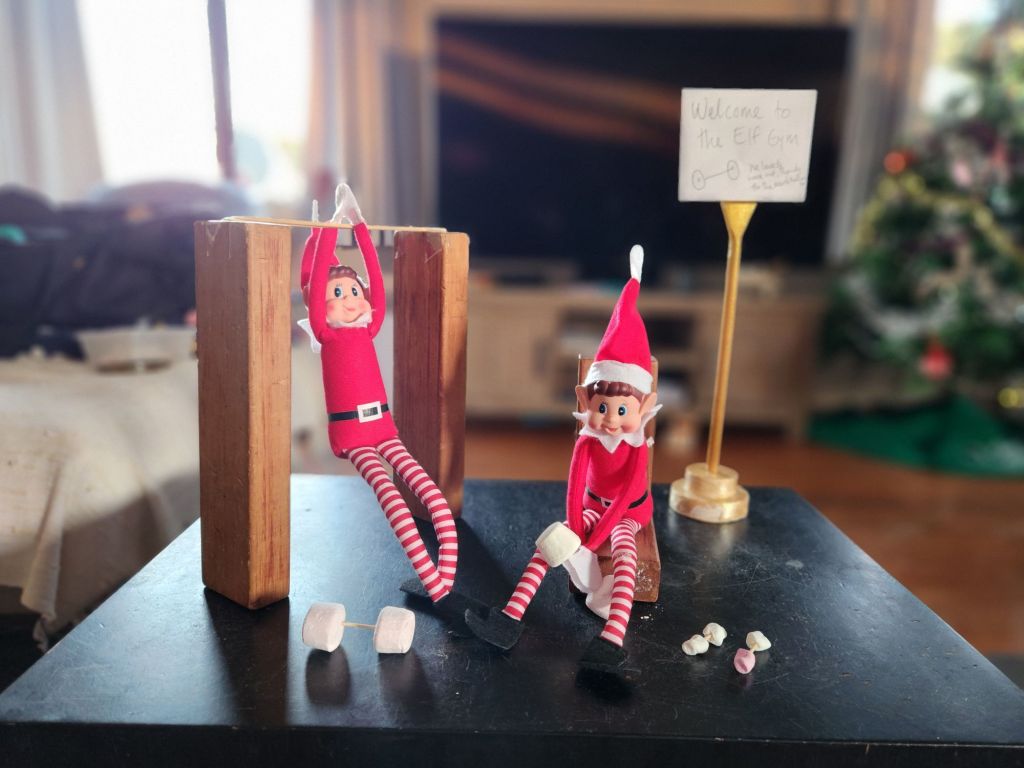
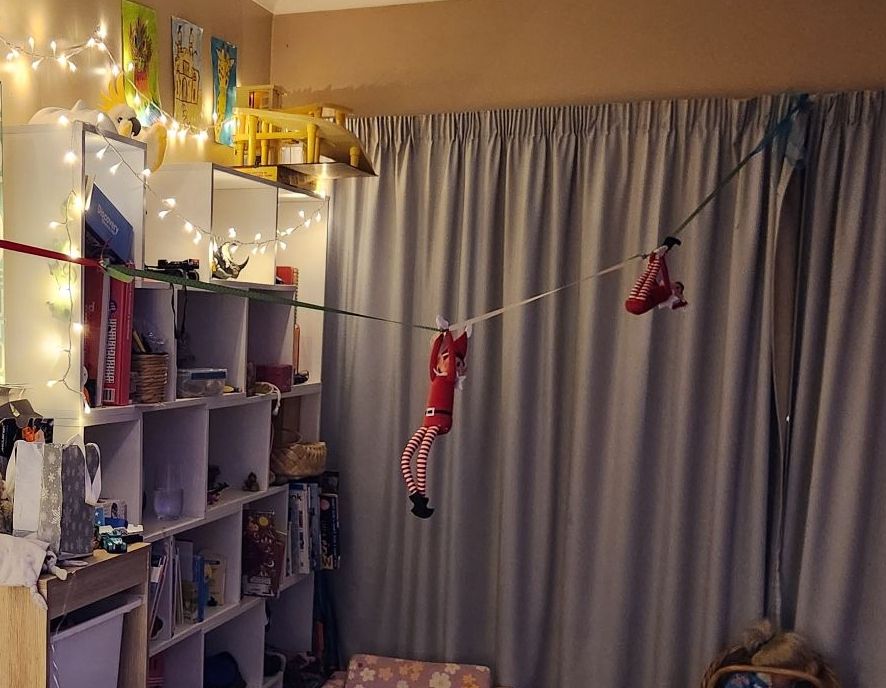
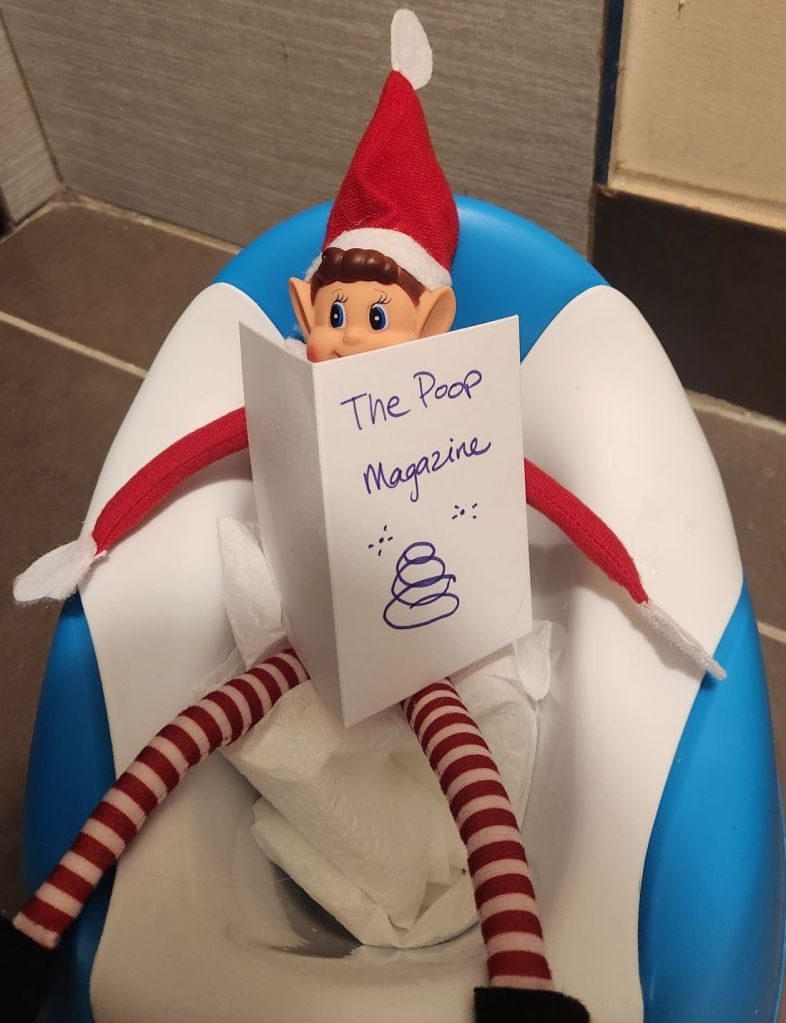
    Whether the elf is ziplining across the lounge or quietly reading a book on the potty, children engage in symbolic play that supports cognitive flexibility, language development, and social understanding.

    Zip lining Elf and Elfie


    5. Supporting Sensory Regulation

    Many elf scenarios can be intentionally designed to support sensory processing needs — another common focus of OT, for example:

    ● Quiet elf scenes for children who benefit from calm, low-stimulation mornings

    ● Movement-based elf ideas for children seeking vestibular or proprioceptive input

    ● Tactile or visual elf activities paired with regulation strategies


    This mirrors how OTs adapt environments to help children feel regulated and ready to engage.

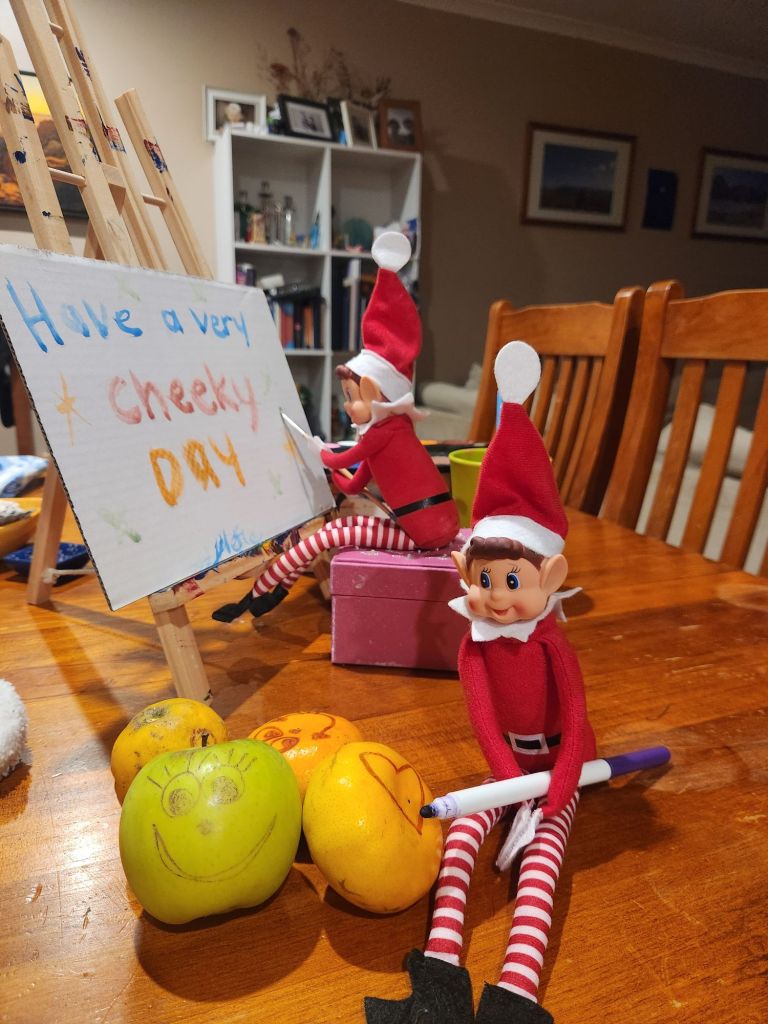
    Painting and drawing with a touch of micheviousness


    6. Encouraging Participation in Daily Occupations

    Occupational therapy is ultimately about supporting participation in meaningful activities.

    Elf on the Shelf can be used to:

    ● Encourage self-care (the elf brushes teeth, packs lunch, puts on shoes)

    ● Model helpful behaviours (the elf cleans up or helps others)

    ● Increase motivation for everyday tasks

    Baking cookies 🍪
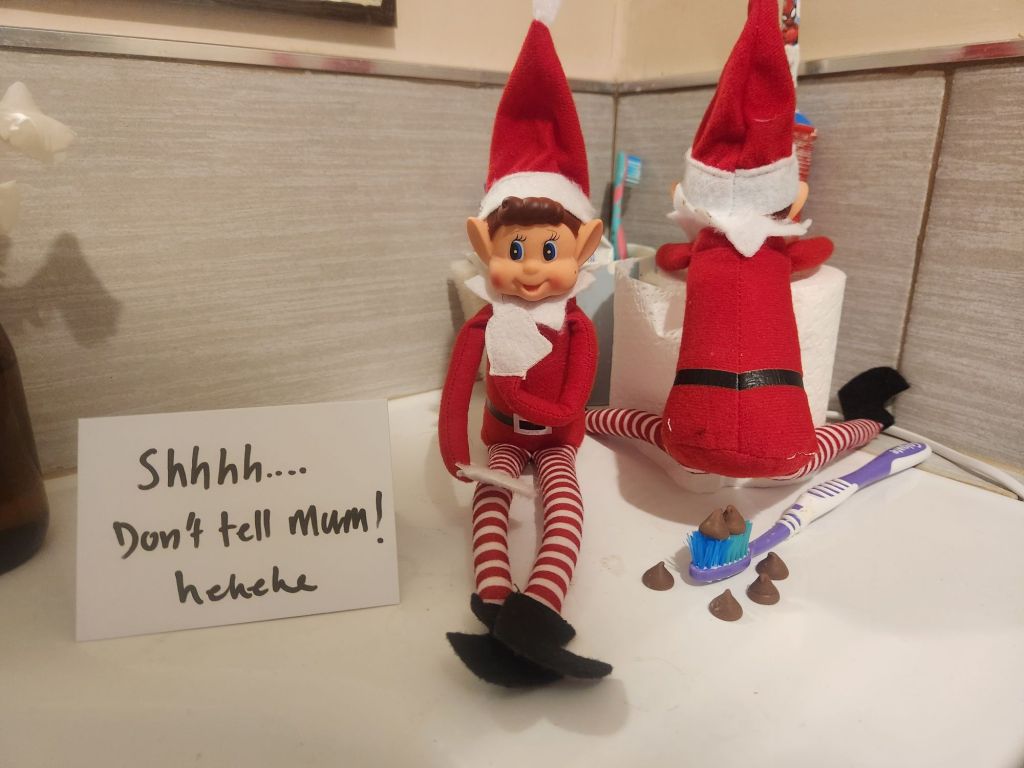
    Shhhh! This one is a little gross!
    Elfie potting training with my 2 1/2 year old


    As you can tell – when viewed through an occupational therapy lens, Elf on the Shelf is much more than a Christmas tradition. It reflects key OT principles: routine, play, regulation, executive functioning, and meaningful participation. All of my most favorite aspects of Occupational Therapy. Combining all of this with a bit of imagination/creativity and a whole bunch of fun, holiday magic is made!

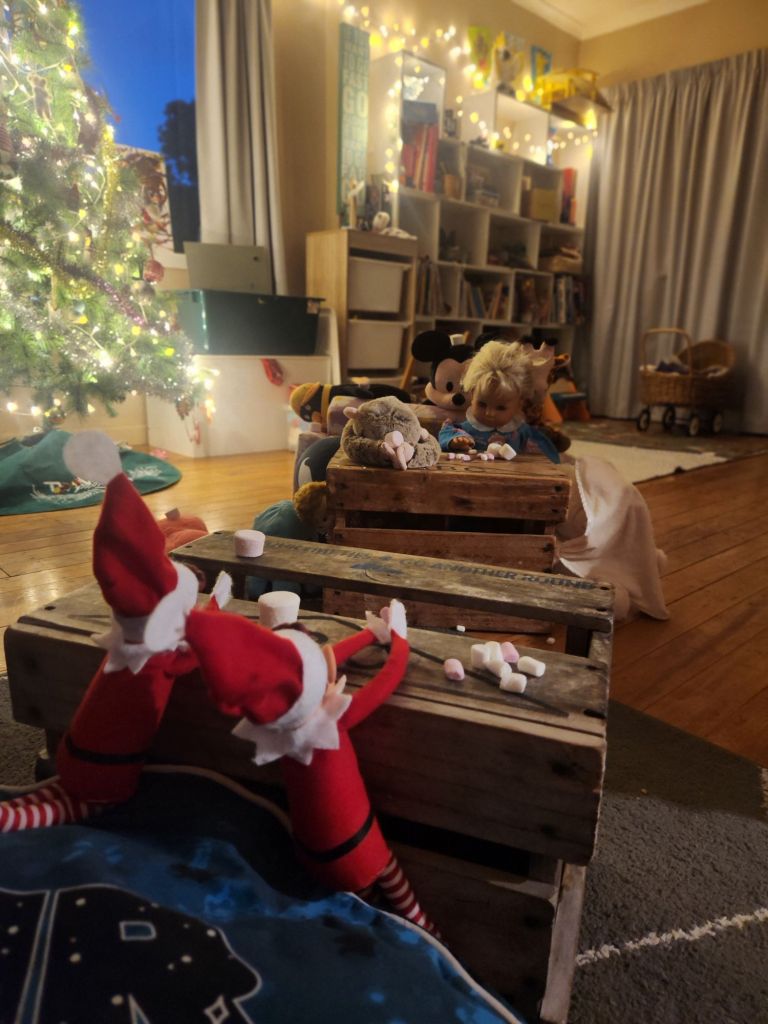
    Snow fight!

  • By Wieteke Idzerda, Occupational Therapist, CRT Therapist

    Progress in mental health isn’t always loud, linear, or easy to measure—and that’s especially true when it comes to cognitive challenges that affect daily life. Occupational therapy offers a unique lens for understanding and supporting this kind of growth, blending practical skill-building with personalised cognitive interventions that help people function with more confidence. In this blog, I reflect on what progress really looks like in this space—often subtle, sometimes surprising, and always deeply meaningful.

    Occupational Therapy in Mental Health

    So what actually is occupational therapy, you ask? It is a health focused profession that focuses on enabling people across all ages to participate in activities (occupations) that are meaningful and necessary for daily life. Within Mental Health Services we focus on how a person’s mental health affects their ability to engage in activities of daily living and to develop, restore or adapt skills and environmennt to support them to live the lives they choose to (World Federation of Occupational Therapists [WFOT], 2019; OTNZ-WNA, 2021).


    While some disciplines focus on symptom reduction, occupational therapy looks at how people live—how they create routines, connect with others, and participate in meaningful occupations. For individuals navigating schizophrenia, bipolar disorder, or/and complex trauma, challenges in functional cognition — the cognitive processes required to perform everyday tasks — often shape their lived experience more than symptoms alone.


    My own focused mahi in this area of mental health has allowed me to reflect on my practice and consider various lessons about recovery and what true progress looks like beyond clinical change.

    Lesson 1: Recovery is a Journey

    Recovery in mental illness is rarely linear. Tāngata whaiora often move through cycles of stability and disruption. Functional cognitive abilities—such as initiation, planning, working memory, and problem-solving—fluctuate alongside these changes.

    A tāngata whaiora with schizophrenia may manage meal prep well for months and suddenly struggle to sequence steps during a period of stress or unwellness. A person with bipolar disorder may demonstrate high levels of productivity (with positive or negative outcomes) during hypomania but struggle with executive function during depressive episodes.


    Instead of viewing these shifts as setbacks, occupational thearpists frame them as learning opportunities to consider what might be happening, always asking the “why” questions. We wonder what is working well (strengths) and isn’t working well (limitations/ restrictions).  We consider all of the cognitive (process), motor (physical), and environmental factors impacting functioning. Using cognitive supports—visual schedules, checklists, environmental simplification, or technology—helps clients regain stability more quickly. Over time, individuals learn to recognise their own cognitive patterns and proactively use compensatory strategies (metacognition).


    Lesson 2: Identity Reconstruction Is a Cognitive Process

    Identity adjustment is common in people with serious mental illness, especially after a new diagnosis or repeated hospitalisations or years of stigma. Part of rebuilding identity involves understanding one’s cognitive strengths and limitations.

    Occupational performance assessments or functional cognition assessments give clients language for their experiences, for example:

    “I’m not lazy; I have difficulty initiating tasks when overwhelmed.
    “I lose track of steps, but checklists help me finish meals.”
    “Planning isn’t my strength, but I’m great at hands-on problem-solving.”

    This reframing is deeply therapeutic. Instead of internalising failure, clients begin to recognise their cognitive profile or diagnosis as something they can work with, not something that defines them. Within Cognitive Remediation Therapy, we can target a person’s metacognition to support them to develop awareness of their own thinking and support them to utilise new cognitive strategies when tackling activities of daily living. Participation in meaningful occupations—gardening, volunteering, working, study, and creative arts—then becoming both identity-building and strengthening cognition.

    Lesson 3: Daily Routines Are Cognitive Interventions

    With people who experience mental illness, the simplest daily routines often demand significant executive functioning. Bathing requires initiation and sequencing; medication management relies on working memory; cooking needs planning and problem-solving; keeping appointments requires time-management.

    When tāngata whaiora build routines, they are strengthening their functional cognition in real-world contexts.

    Occupational therapists use occupation-based interventions to support cognitive functioning by:

    ● Breaking tasks into manageable steps
    ● Embedding cues into the environment
    ● Creating predictable patterns and habits that reduce cognitive load
    ● Teaching compensatory strategies for memory or attention
    ● Using repetition to strengthen cognitive habits

    Progress often appears in these small moments: remembering medication without prompting, completing laundry from start to finish, or anticipating what needs to be done next. These gains provide more day-to-day stability than symptom-focused interventions alone. These gains can mean everything to an individual who’s seeking independence and building their confidence / self efficacy.

    Lesson 4: The Therapeutic Relationship Enhances Cognitive Safety

    For individuals with trauma histories or serious mental illness, cognitive functioning is profoundly affected by psychological safety. When tāngata whaiora feel judged or rushed, their executive functioning can decrease; when they feel supported and respected, their problem-solving and planning often improve.

    A strong therapeutic relationship offers:

    ● predictability that supports trust between the OT and whaiora.
    ● a safe space for practicing complex tasks whether this is at home, community, or in the clinic.
    ● the ability to recognise overwhelm and how to press pause during sessions
    ● provide plenty of positive reinforcement. It needs to be authentic and allow for perspective taking.

    In this sense, the therapeutic relationship becomes a cognitive scaffold just as much as a relational one. This is a significant principle we maintain throughout cognitive remediation therapy.

    What Progress Looks Like When You Include Functional Cognition Within Your Practice as an OT:

    Beyond symptom reduction, progress may look like:

    ● Using an activity planner or app consistently
    ● Sequencing a multi-step task without cues
    ● Automatically engage in sensory modalities to calm your sympathetic nervous system
    ● Preparing meals independently
    Anticipating consequences before acting
    ● Utilise and navigate public transportation
    ● Adapting routines when symptoms or stress increase

    These gains are specific to each individual and overall reflect improved quality of life.

    The Essence of the Work as a OT

    Occupational therapists help people build lives that feel  purposeful, meaningful and manageable. The work can be slow, relational, creative, and profoundly authentic as it truly maintains the tāngata whaiora at the centre of their treatment. Progress may not always show up on symptom checklists, but in the quiet victories of daily living, OT helps people discover new cognitive capacity, stronger routines, and renewed identity.


  • Written by Wieteke Idzerda, Occupational Therapist, CRT therapist

    Functional cognition—how people use thinking skills to perform real-world tasks—is a critical but often overlooked part of mental health. Through an occupational therapy (OT) lens, functional cognition becomes more than a set of cognitive abilities; it is cognition “in action”, embedded in daily routines, environments, and meaningful occupations.

    Research across mental health and rehabilitation consistently shows that cognitive abilities, executive functioning, and environmental demands interact to shape a person’s capacity to participate in daily life (Amini et al., 2023; Reuter et al., 2016). This is why OT uniquely addresses functional cognition as part of holistic, recovery-oriented care.

    What Is Functional Cognition?

    Functional cognition involves the integration of:

    • cognitive processes (e.g., attention, memory, problem-solving, executive function),
    • performance skills,
    • habits and routines, and
    • environmental demands.

    Rather than examining cognition in isolation, Occupational therapy evaluates how thinking skills translate into daily performance. People may perform well on cognitive tests yet still struggle with tasks such as managing money, organizing their home, or completing schoolwork—demonstrating the importance of context-based, occupation-focused assessment (Amini et al., 2023).

    Functional Cognition and Mental Health: What the Evidence Shows

    Depression

    Cognitive difficulties such as slowed processing, impaired attention, and executive dysfunction are well-documented in major depressive disorder. Cognitive rehabilitation and remediation have been shown to improve both cognitive performance and depressive symptoms (Albanese et al., 2023).

    Anxiety

    Anxiety disorders are associated with reduced working memory and decreased attentional control, especially under stress. OT interventions incorporating mindfulness have demonstrated improvements in functional performance and self-regulation (Kimura et al., 2023).

    Schizophrenia & Psychotic Disorders

    Impairments in memory, executive function, and processing speed significantly affect daily functioning. A recent systematic review found that OT interventions—including cognitive training, functional skills practice, and self-management—improved cognitive performance and daily functioning in individuals with schizophrenia (Smith et al., 2025).

    Bipolar Disorder

    Fluctuations in attention, planning, and impulse control across manic and depressive states contribute to functional impairment. Occupational therapy’s focus on routines, structure, and environmental supports helps stabilise functional cognition during mood variability (Gutiérrez et al., 2020).

    Trauma-Related Disorders

    Hyperarousal and attentional fragmentation can disrupt daily functioning. Sensory-based and occupation-focused OT interventions have shown benefit in restoring emotional regulation and improving task engagement (Craig & McMillan, 2019).

    How OTs Assess Functional Cognition: Evidence-Supported Approaches

    Occupational therapists use a combination of:

    • performance-based assessments
    • activity analysis
    • environmental assessment
    • client-centred questioning/interviewing

    Performance-based assessments often reveal real-world functional challenges not captured on standardised cognitive tests (Reed et al., 2019).

    Evidence-Supported OT Interventions for Functional Cognition

    Cognitive Strategy Training

    Teaching planning, organization, and self-monitoring strategies has been shown to improve executive function and daily performance across mental health populations (Toglia et al., 2017).

    Cognitive Remediation Therapy

    Meta-analytic evidence supports cognitive remediation for improving both cognitive functioning and mood in depression (Albanese et al., 2023) and cognition and functioning in schizophrenia (Smith et al., 2025).

    Occupation-Based, Real-World Practice

    Practicing meaningful tasks in context—such as cooking, budgeting, shopping, or medication management—improves participation and independence, especially after mental health–related functional decline (Reuter et al., 2016).

    Environmental Modifications

    Environmental supports reduce cognitive load and enhance functional performance. This can include simplifying spaces, using visual cues, or creating structured routines (Gutiérrez et al., 2020).

    Mindfulness-Based and Sensory Approaches

    OT programs integrating mindfulness have demonstrated improvements in regulation and occupational performance in people with depression and anxiety (Kimura et al., 2023).

    Why Functional Cognition Matters for Recovery

    Functional cognition supports:

    • independent living
    • role participation
    • self-efficacy
    • social belonging
    • quality of life

    For individuals living with mental health conditions, these areas often determine whether treatment translates into meaningful recovery.

    Evidence shows that occupational therapy interventions targeting functional cognition lead to improvements in daily functioning, participation, and life satisfaction—not just symptom relief (Smith et al., 2025; Reuter et al., 2016).

    References

    Albanese, E., Lombardi, E., Barbui, C., Orsenigo, L., & Priori, A. (2023). Cognitive rehabilitation for improving cognitive functions and reducing the severity of depressive symptoms in adult patients with major depressive disorder: A systematic review and meta-analysis. BMC Psychiatry, 23, 554. [https://doi.org/10.1186/s12888-023-04554-w](https://doi.org/10.1186/s12888-023-04554-w)

    Amini, M., Brown, T., & Goltl, N. (2023). Functional cognition and occupational performance: A conceptual overview. Journal of Occupational Therapy Research, 41(2), 120–133.

    Craig, S., & McMillan, H. (2019). Sensory-based occupational therapy intervention for trauma-related disorders: A scoping review. Occupational Therapy International, 26, 1–12.

    Gutiérrez, M., Rodriguez, N., & Blair, C. (2020). Cognitive and functional performance in bipolar disorder: Implications for occupational therapy. American Journal of Occupational Therapy, 74(3), 1–11.

    Kimura, Y., Ito, T., & Kawashima, R. (2023). Effectiveness and brain changes associated with an occupational therapy program incorporating mindfulness for outpatients with anxiety and depression: A randomized controlled trial. Psychiatry Research, 324, 115–123. [https://doi.org/10.1016/j.psychres.2023.115123](https://doi.org/10.1016/j.psychres.2023.115123)

    Reed, K. L., Maslin, M., & Ziviani, J. (2019). Performance-based assessment of functional cognition: A systematic review. OTJR: Occupation, Participation and Health, 39(1), 3–14.

    Reuter, E., Ledl, S., & Meister, C. (2016). Occupational therapy interventions to improve the performance of instrumental activities of daily living for community-dwelling older adults: A systematic review. American Journal of Occupational Therapy, 70(4), 1–12.

    Smith, G., Patel, R., & Jerome, K. (2025). Enhancing cognitive functioning in schizophrenia through occupational therapy interventions: A systematic review. Schizophrenia Research, 265, 12–25.

    Toglia, J., Rodger, S., & Polatajko, H. (2017). Cognitive strategy training in occupational therapy: Theory, models, and evidence. OT Practice, 22(3), 7–14.


  • By Wieteke Idzerda, Occupational Therapist, CRT Therapist

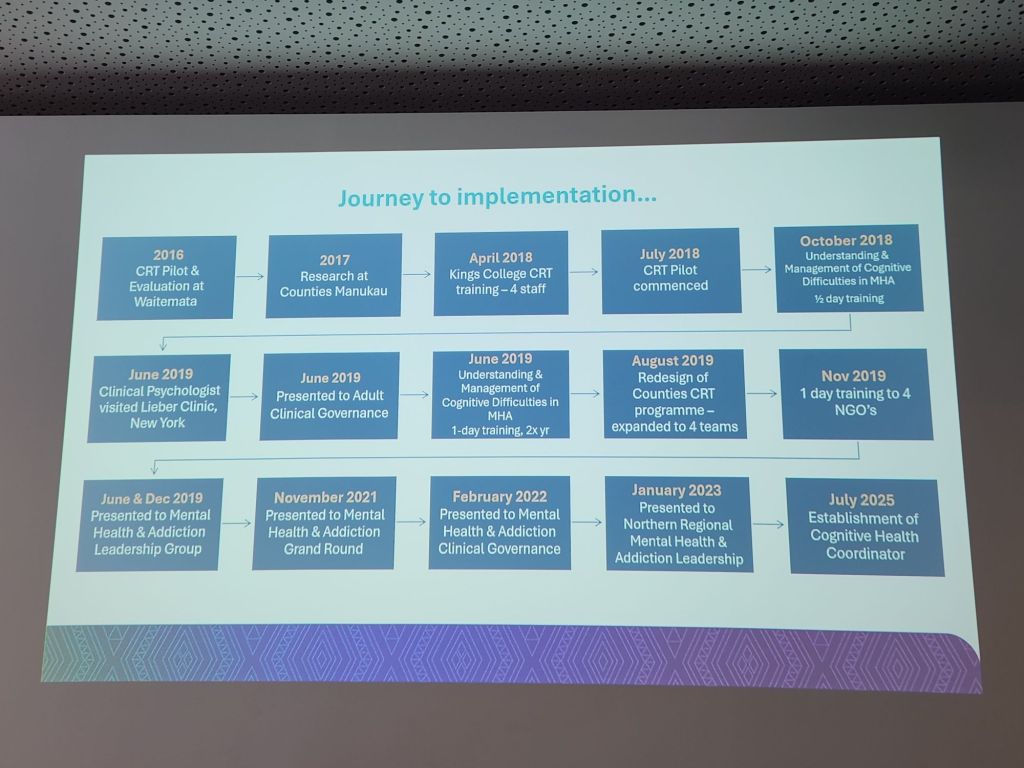
    This year marks ten years since my Cognitive Remediation Therapy (CRT) journey began in Aotearoa New Zealand in 2015. It started with a single question posed by Dr Katrina Wallis (Occupational Therapist) at one of our bimonthly Occupational Therapy meetings at the then Waitematā District Health Board:


    “Has anyone heard of Cognitive Remediation Therapy?”


    None of us had. After a brief description of CRT—and its potential to support tāngata whai i te ora (clients, or more specifically, “people who seek wellness”), particularly those with schizophrenia who often have limited treatment options beyond medication—it didn’t take long for a small working group of Occupational Therapists to form that very day. The purpose of this group was to find out everything about CRT from existing programmes, literature, and technology.


    Following several collaborative meetings with our clinical psychology colleagues, we developed our first CRT pilot programme. In 2016, eight clients completed a 16-week pilot incorporating key elements from multiple international CRT models. This included pen and paper tasks, a digital programme with cognitive exercises and a bridging social cognition group.  The post-pilot review demonstrated excellent functional outcomes for our tāngata whai i te ora. This success enabled us to secure funding to travel to the Institute of Psychiatry, Psychology and Neuroscience at King’s College London, where we aimed to deepen our knowledge of CRT and bring this expertise home to Aotearoa New Zealand.


    During training with Dr Matteo Cella and Dr Clare Reeder, we were introduced to CIRCuiTS™—the Computerised Interactive Remediation of Cognition and Thinking Skills programme. This innovative and evidenced-based digital therapy supports people experiencing serious mental illness and cognitive difficulties to enhance their functioning and overall quality of life. It does this by identifying very clear cognition related goals and focusing on metacognition.


    By 2017, using what we had learnt from both our pilot and our time at King’s College London, we developed foundational CRT training within Waitematā Health and established the New Zealand CRT Steering Group. These training programmes ensured clinicians had the knowledge and skills required to implement CRT effectively. The Steering Group—comprising clinicians, researchers, lived-experience experts and policymakers—became a vital structure for national oversight, decision-making, and quality assurance for CRT across Aotearoa New Zealand.


    In 2018, our collaboration and knowledge continued to grow nationally. We officially named CRT in New Zealand Te Rau Whakaaro – Thinking Skills for Life, reflecting our commitment to delivering cognitive rehabilitation tailored to our diverse population. That same year, we held our first National CRT Training in Waikato, facilitated by Dr Matteo Cella alongside New Zealand’s founding CRT members—an important milestone that united practitioners from across the motu.


    In 2019, growth continued regionally, particularly within Auckland. Dr Melodie Barr, Clinical Psychologist at Counties Manukau, developed a foundational cognition training for all clinicians, which was soon adopted by Waitematā. This became a key part of our stepped-care model for cognition—an important development that increased accessibility by improving awareness and understanding across services.


    In 2020, professional recognition and international collaboration strengthened further. We presented at the Australasian Forensic Occupational Therapy Forum, highlighting CRT’s role within forensic services. We also attended the Cognition Conference for Mental Health in Sydney, connecting with international experts and expanding our global network.

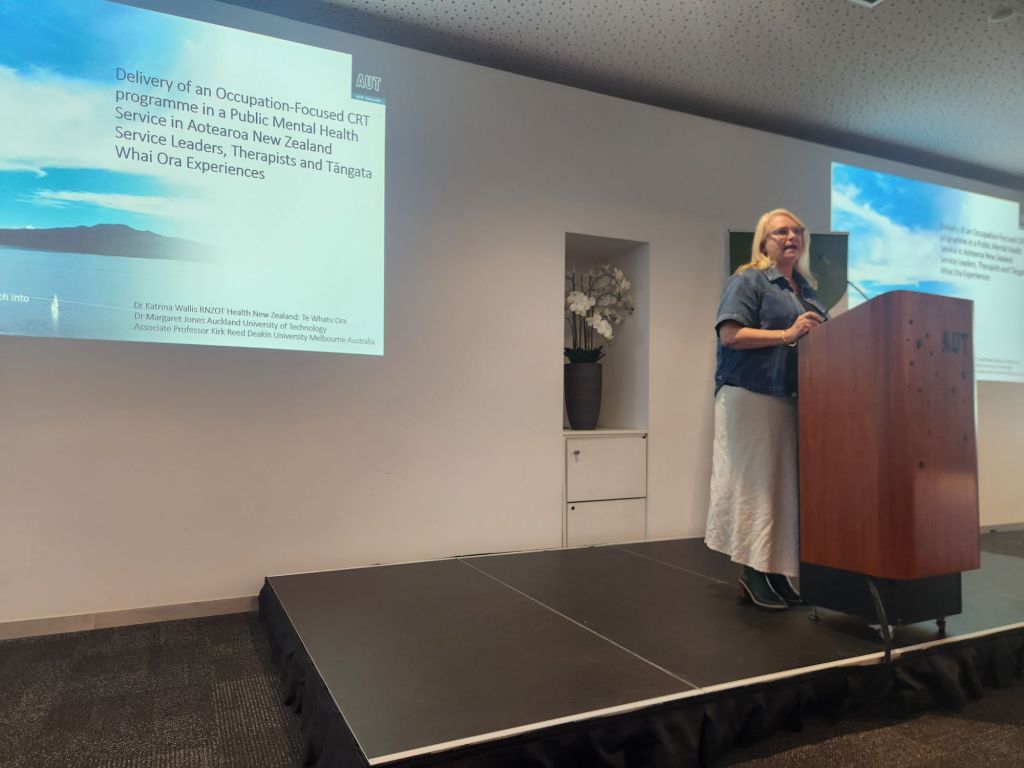
    Despite the challenges of COVID-19, CRT in Aotearoa continued to grow, innovate, and deepen its evidence base through recent and emerging studies. Recommendations included that cognitive assessment should be routinely conducted within Mental Health Services (MHS) to identify cognitive strengths and deficits early (Morton et al. 2025). It has also been recommended that specific guidance is developed for leaders, clinicians, and policy makers on how to support the delivery of occupation-based CRT programmes in Aotearoa New Zealand (Wallis, 2024). Interest has increased nationwide, with New Zealand-based studies being completed.


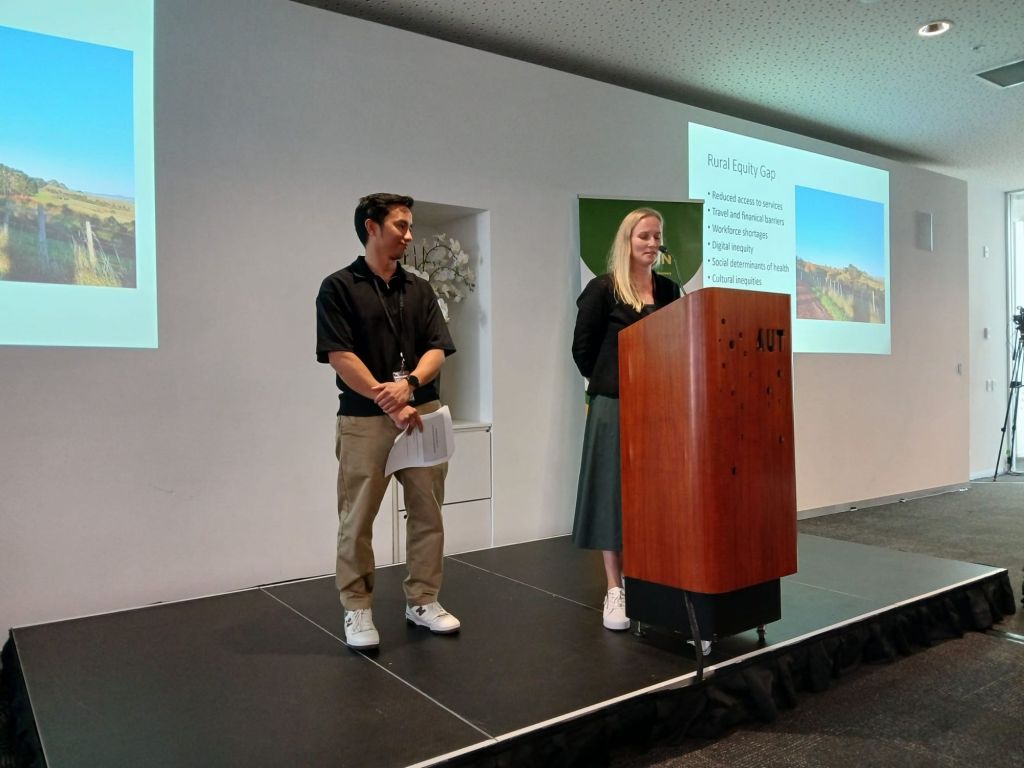
    We have learnt to adapt to the needs of tāngata whai i te ora and services—some clinicians deliver CRT individually, others in group formats. We now readily offer CIRCuiTS™ remotely with the therapist in the office and tāngata whai i te ora completing sessions from home. This approach is routinely offered in our rural districts, increasing accessibility to CIRCuiTS™ and has proven very successful.


    We have continued to deliver CRT training annually—most recently in October 2025, facilitated by myself and Abbigail Barnard (OT), with participants from new districts, NGOs, and rehabilitation centres. The word is spreading, especially as more people witness CRT’s effectiveness and the positive outcomes it brings for our tāngata whai i te ora and their whānau.

    Lessons learnt from the last 10 years


    ● Just do it! CRT can feel like a big undertaking, but once you start, it quickly becomes a smooth and rewarding process.


    ● Collaborate, be innovative, and utilise the resources around you to get CRT up and running.

    ● Keep offering training and support to clinicians to maintain momentum once they start.


    ● If you’re a small service running CRT, have a succession plan to ensure sustainability when staff move on.


    ● Share resources generously. The more we learn from each other, the greater the impact on our tāngata whai i te ora.


    ● Celebrate the wins —with your tāngata whai i te ora, colleagues, and wider teams.


    ● Keep reflecting and checking in – individually and as a group. Utilise supervision and steering groups to ensure the principles of CRT are being upheld.

    Looking Ahead

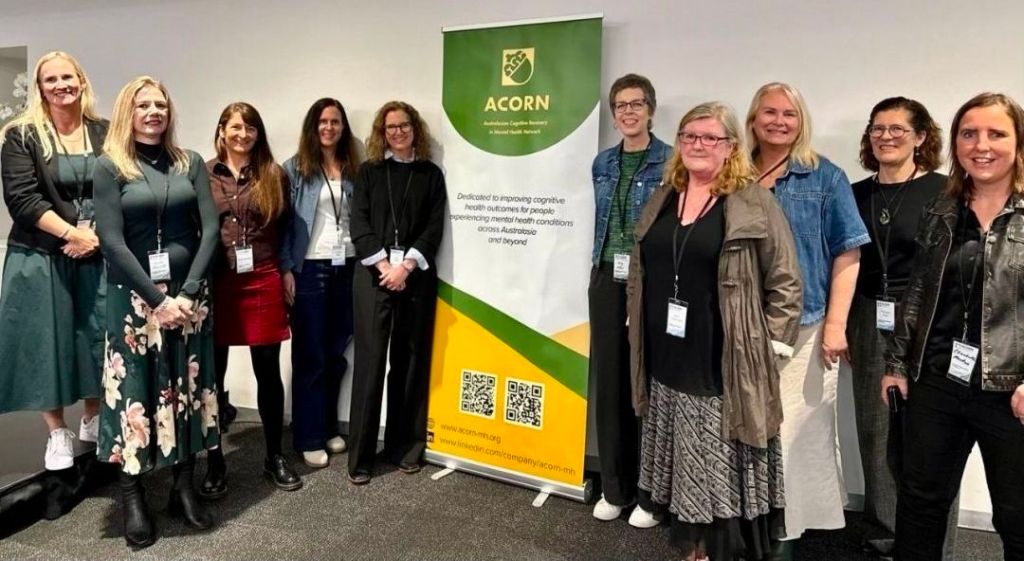
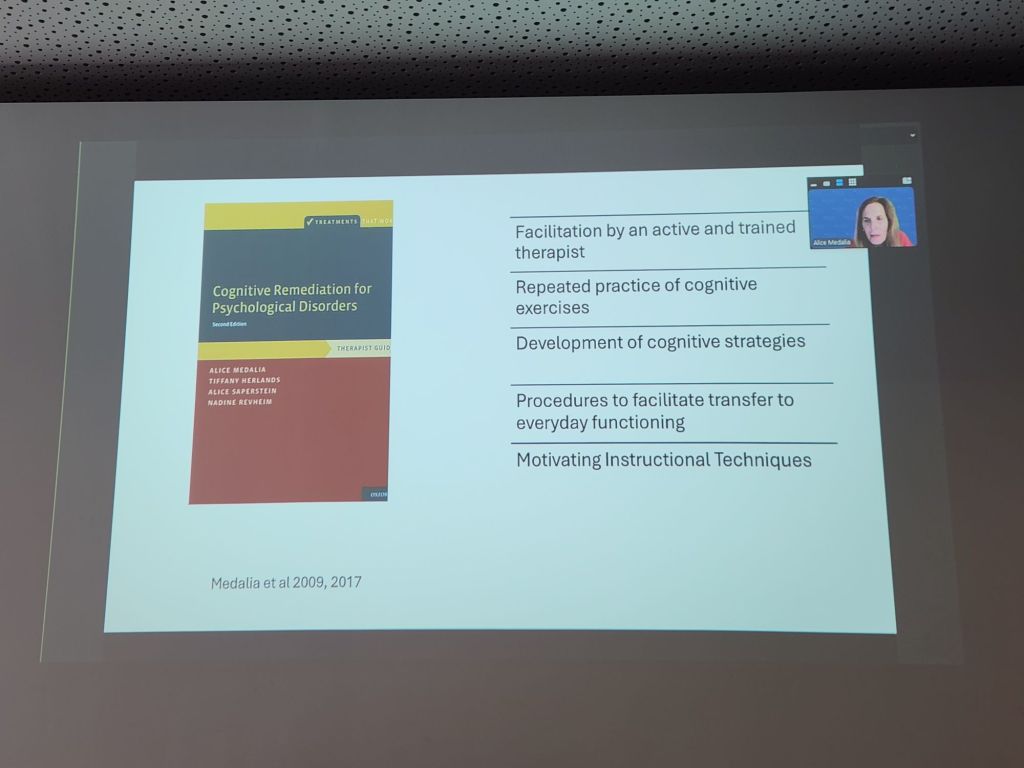
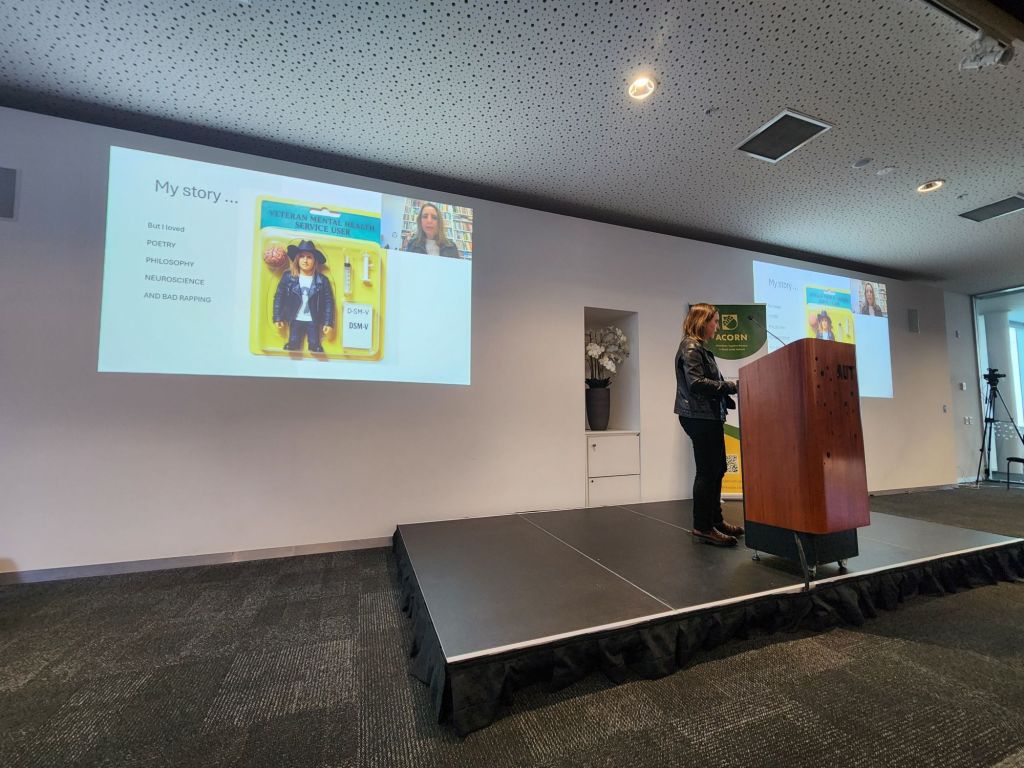
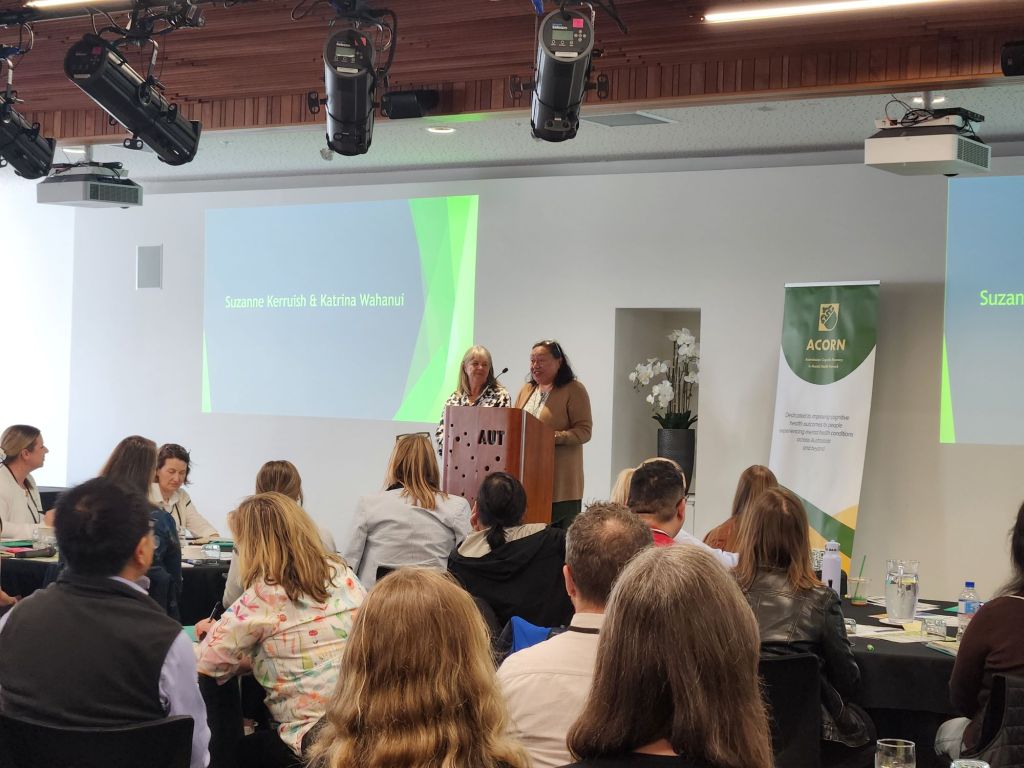
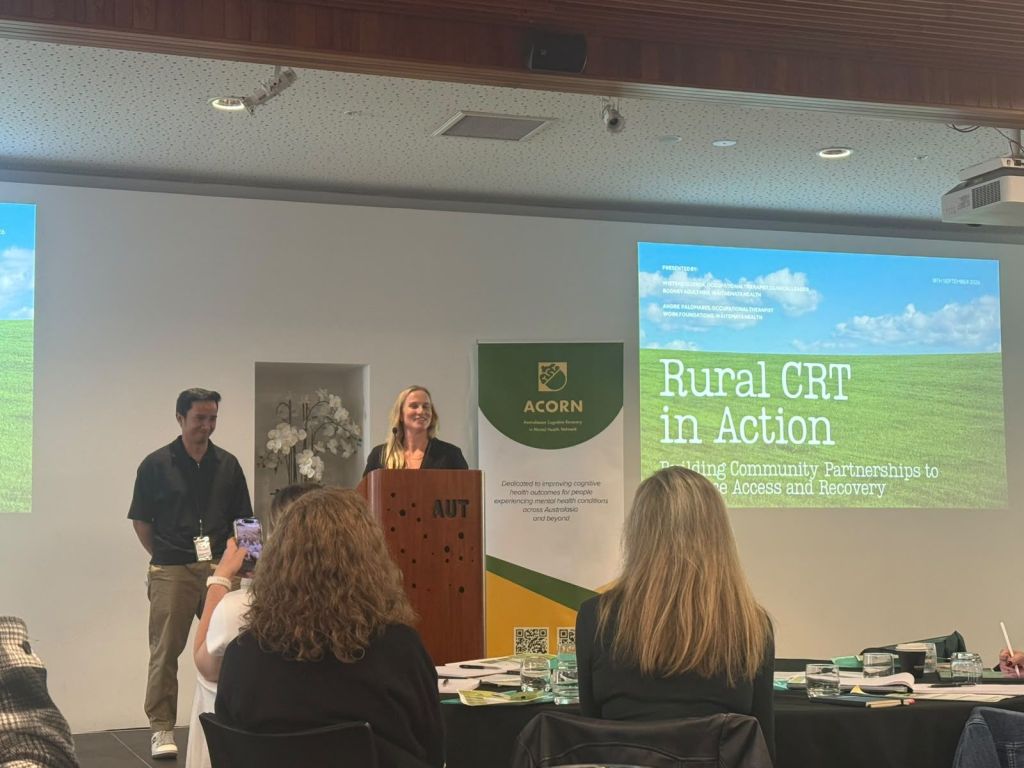
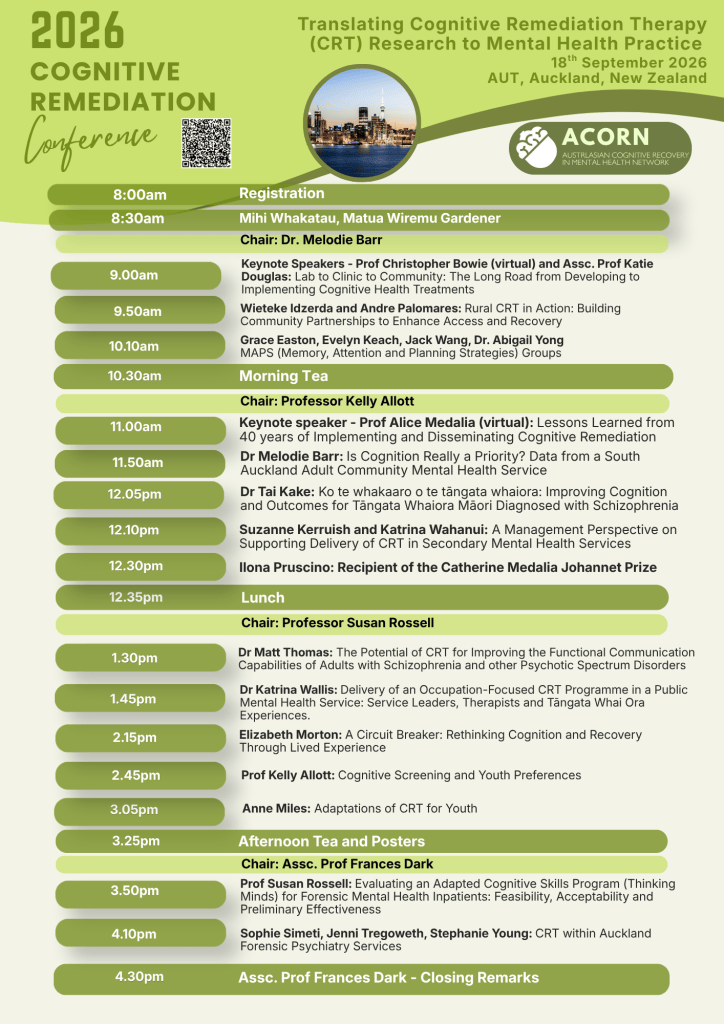
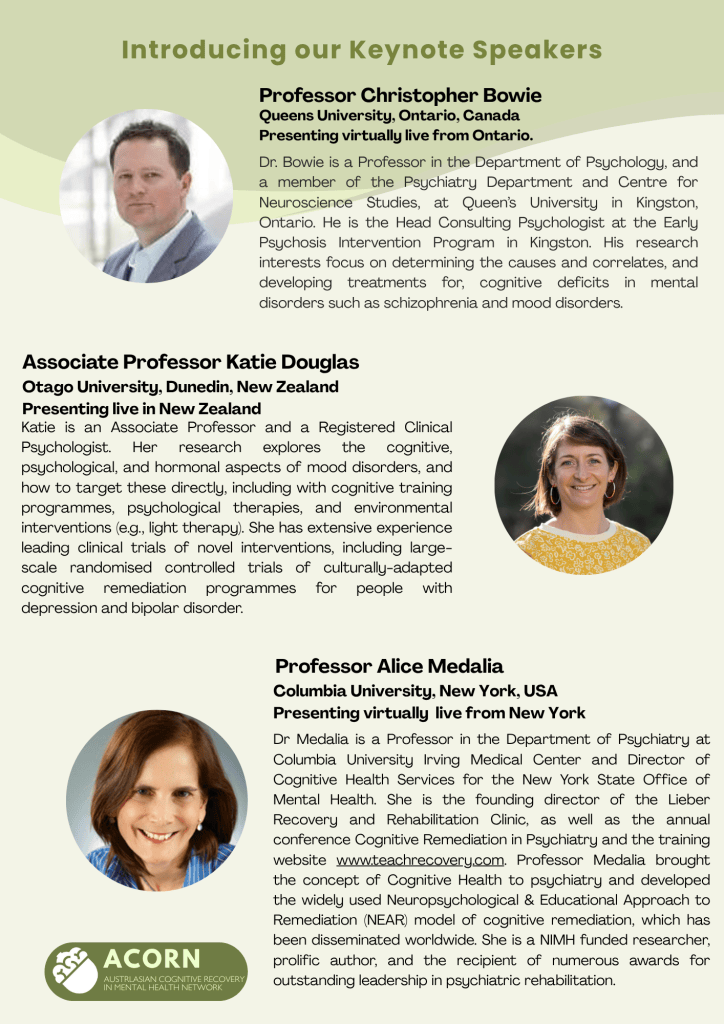
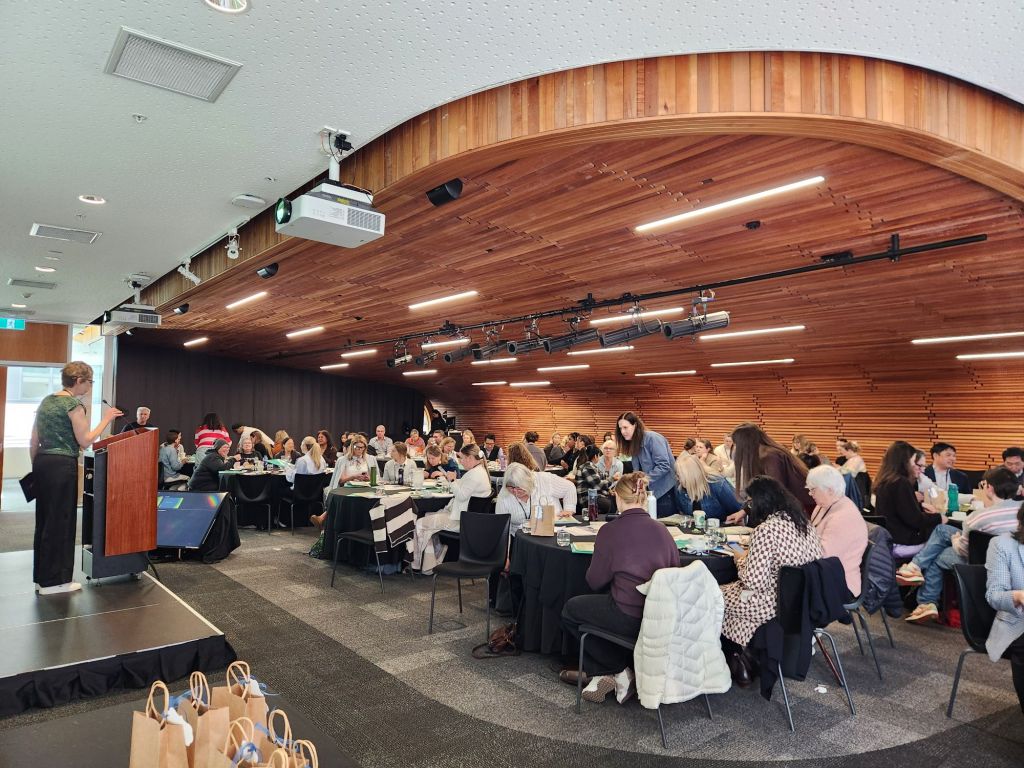
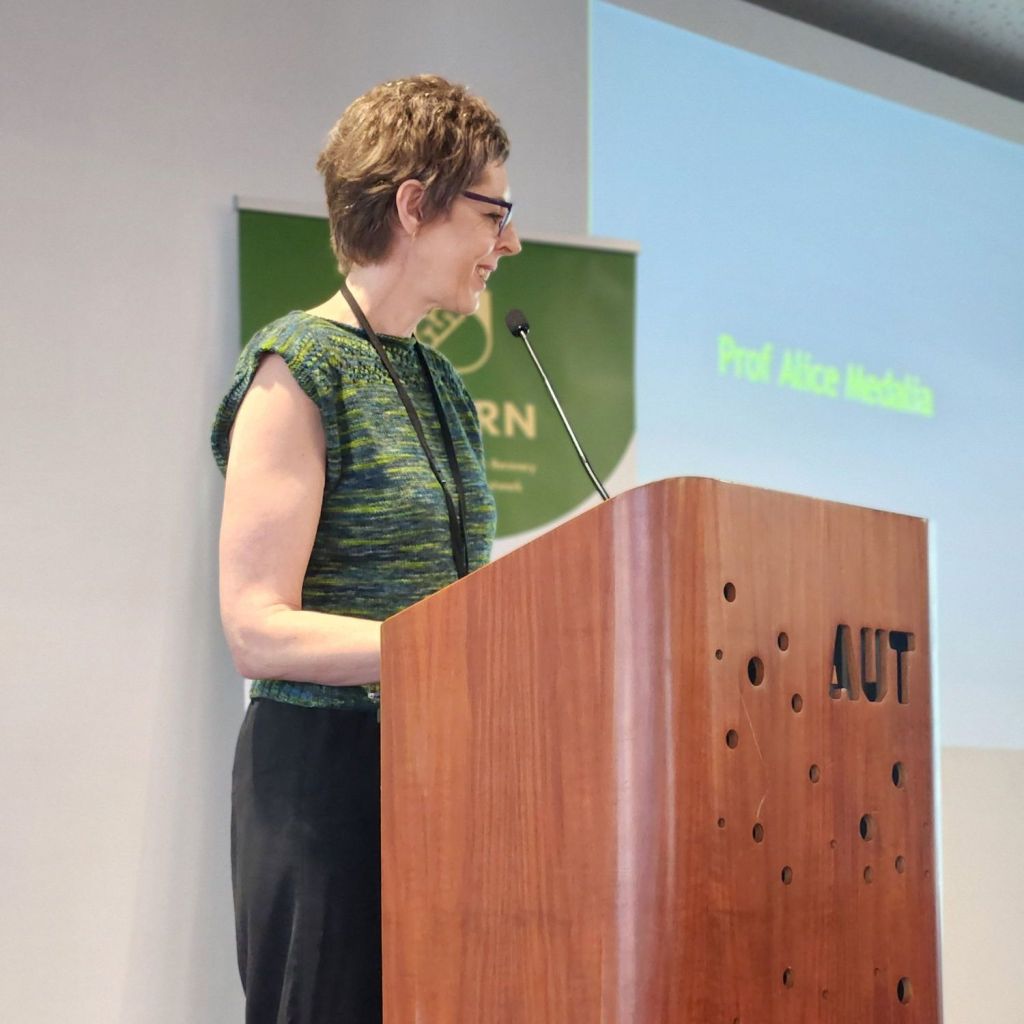
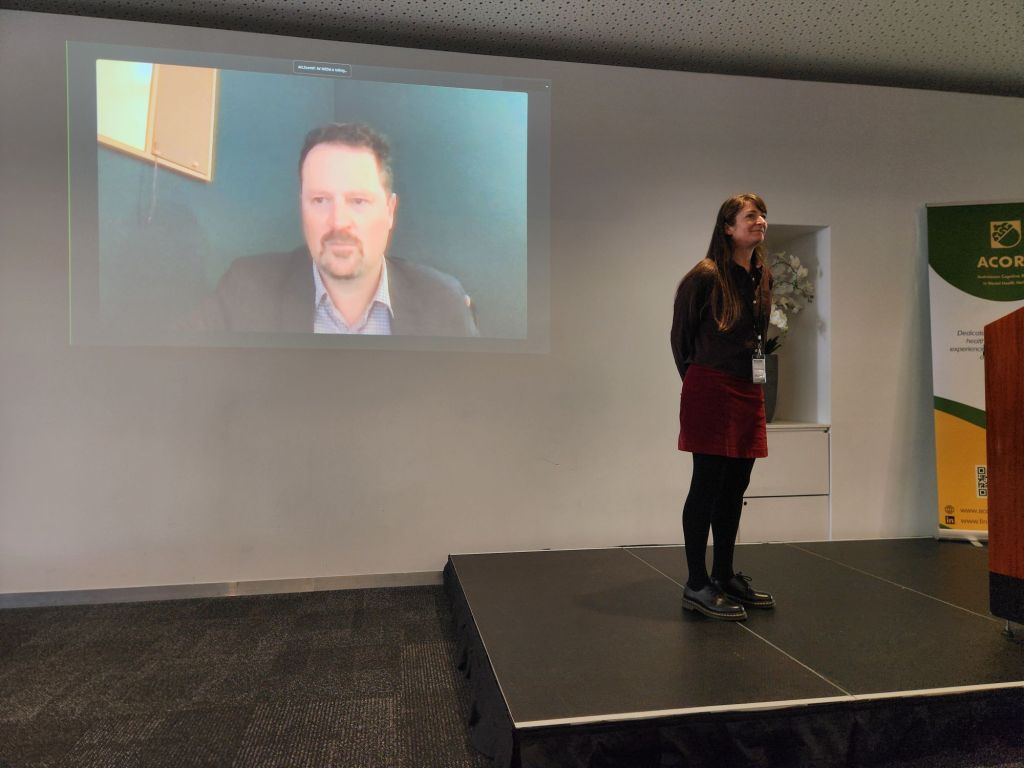
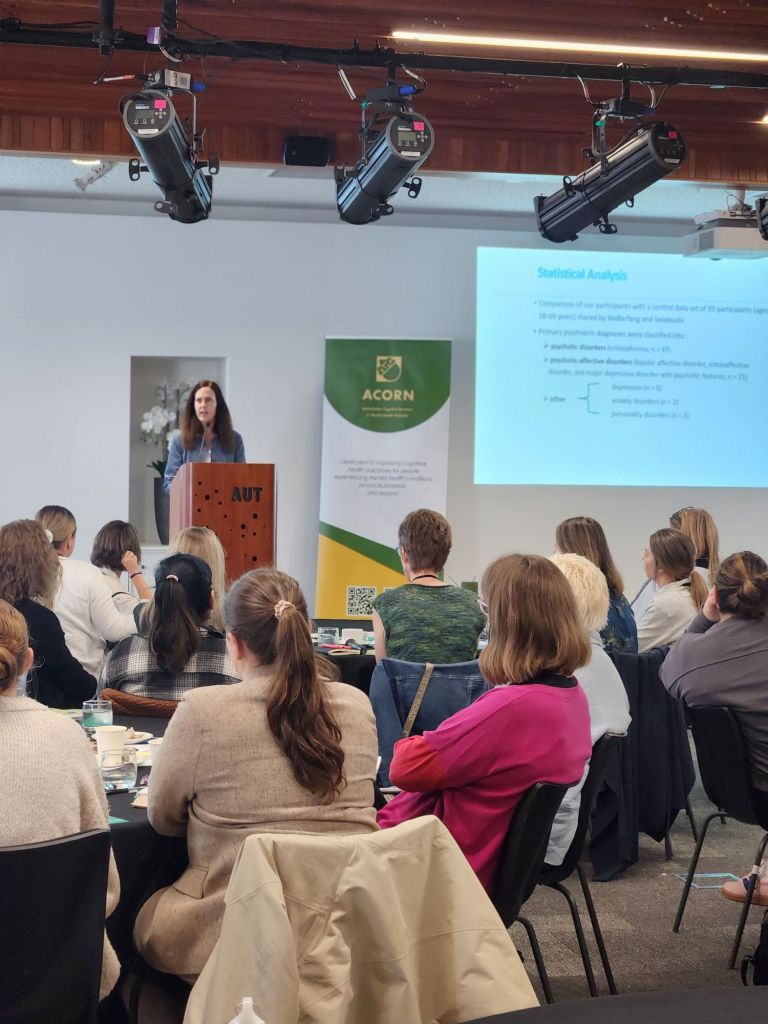
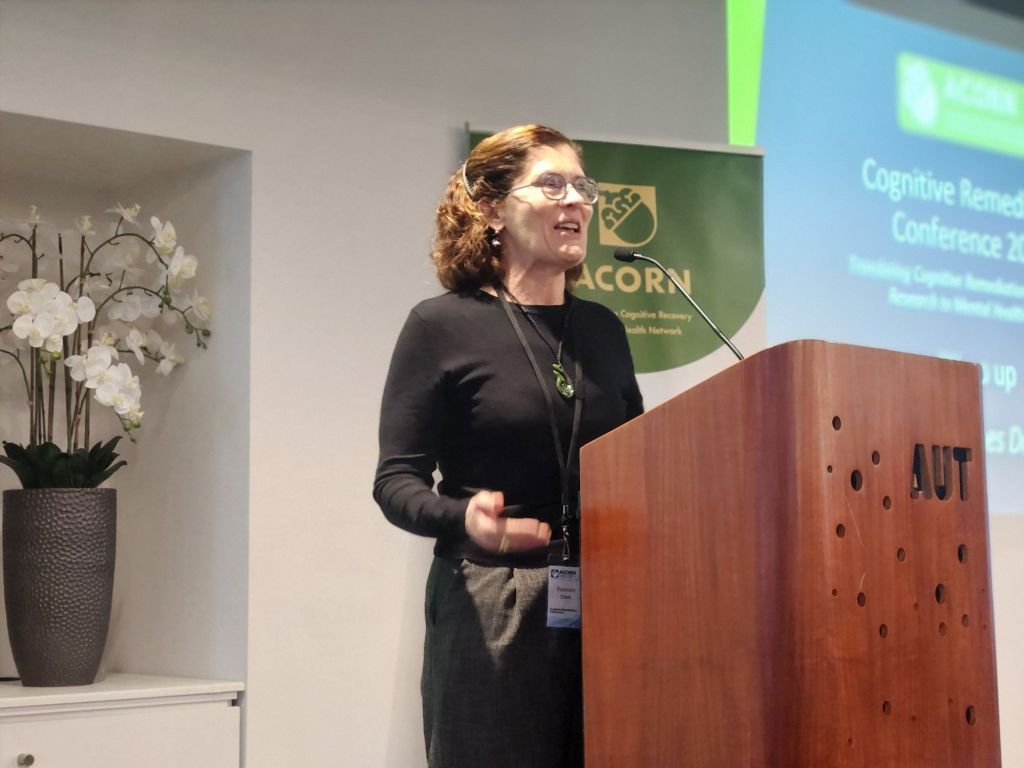
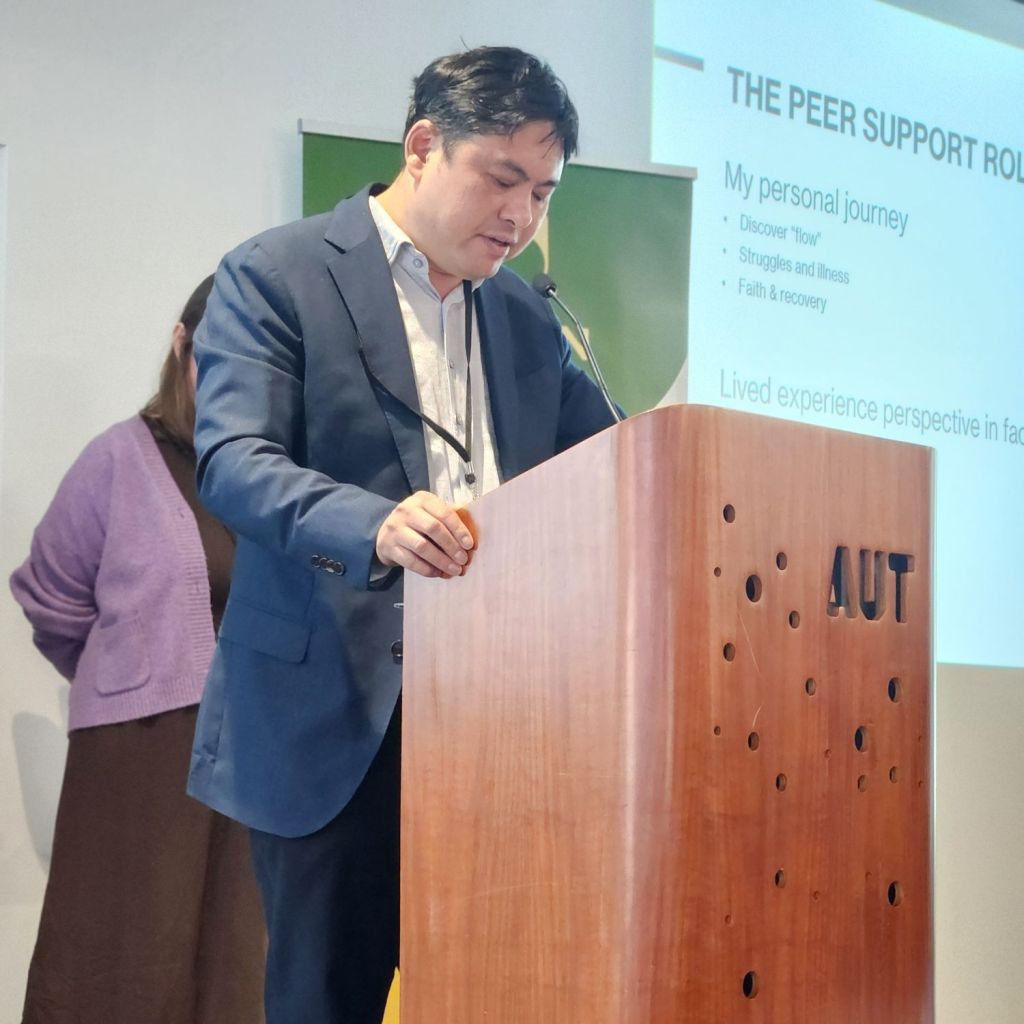
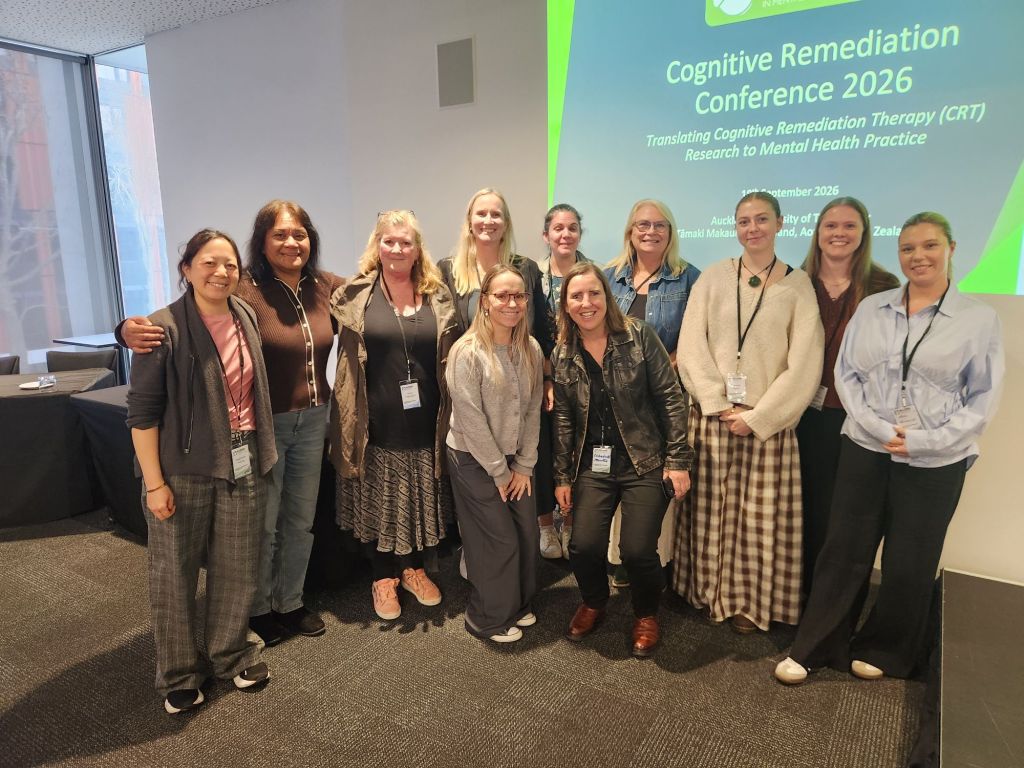
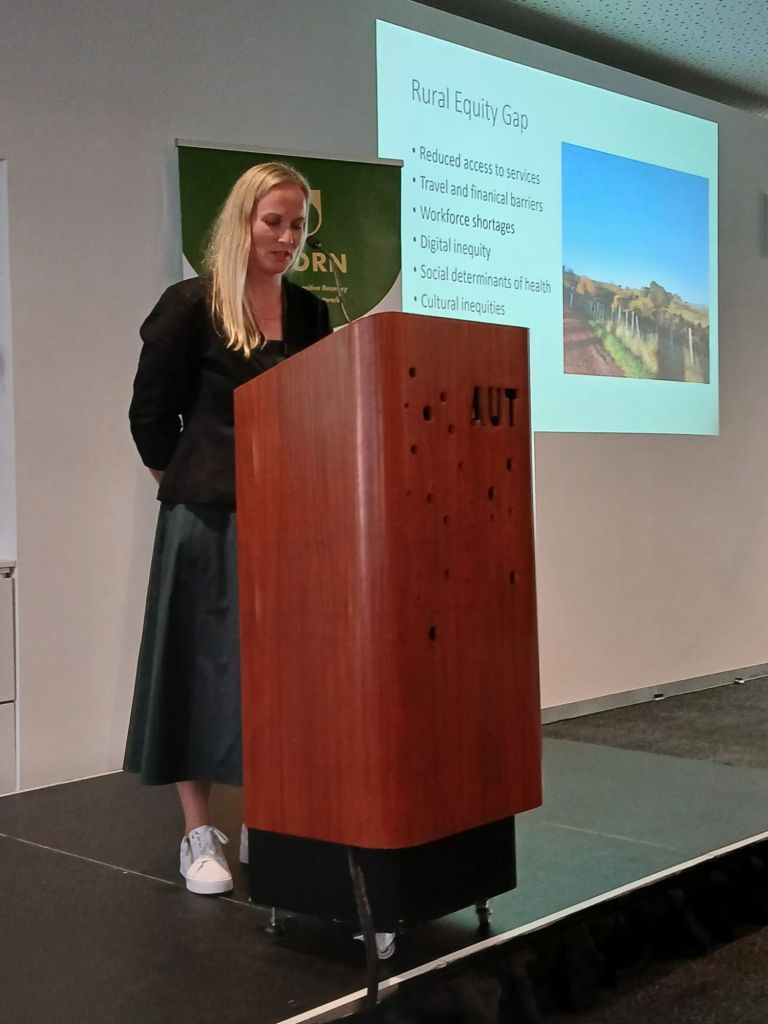
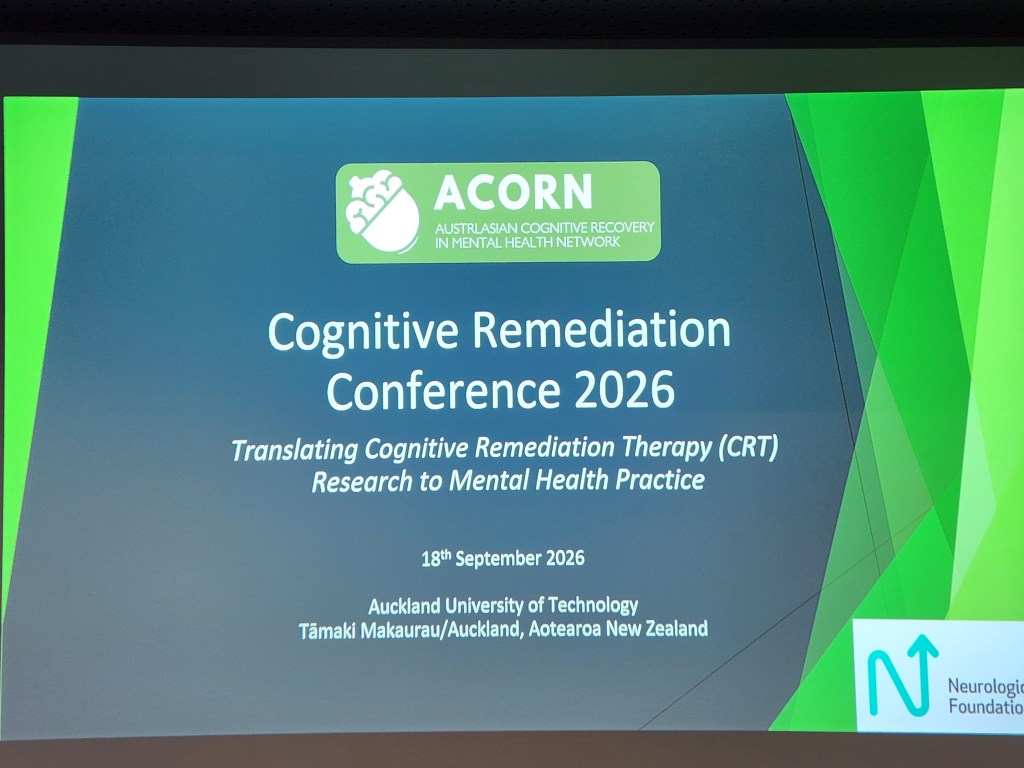
    In 2026, Aotearoa New Zealand will host the ACORN Cognitive Remediation Conference, an international gathering of leaders in cognitive rehabilitation as well as an opportunity to show and teach what CRT is all about to those new to this intervention. This event will celebrate progress over the past decade and help shape the next chapter of CRT both nationally and internationally.

    What’s Next for CRT in Aotearoa New Zealand Beyond 2026?


    ● National and regional expansion: Ongoing integration of CRT across healthcare, with increased collaboration both nationally and internationally.


    ● Technological innovation: Emerging digital tools and platforms will continue to enhance access to cognitive remediation.


    ● Policy influence: Continued advocacy and research may help embed CRT within mainstream mental health and cognitive-impairment pathways.


    ● Community outreach and prevention: Greater reach beyond clinical settings, including early-intervention and prevention programmes—particularly for younger populations at risk of cognitive challenges.

    Summary


    What began with just three districts has grown into a truly national movement. Today, CRT is delivered by professionals across Waitematā, Te Toka Tumai Auckland, Counties Manukau, Waikato, and Southern, with Captial, Coast and Hutt Valley soon to start offering it, and even more districts and specialist groups expressing interest in doing so. CRT is now offered across Adult Mental Health Services, Forensic Services, Work Rehabilitation, and Māori Specialist Services. While various models have been trialled, CIRCuiTS™ remains our main CRT programme for tāngata whai i te ora.


    Further development is also underway in Child and Adolescent Mental Health and Early Psychosis Intervention (EPI) services. The growth and enthusiasm across the motu reflect CRT’s increasing recognition as an effective, meaningful, and hopeful approach that supports tāngata whai i te ora to achieve their goals, improve their functioning in daily life, and enhance their overall quality of life.